

An Uninterruptible Power Supply (UPS) plays a critical role in protecting IT equipment from power disturbances. From brief voltage dips to full power outages, even a short interruption can cause data loss, hardware damage, or service downtime.
The level of protection a UPS provides depends largely on its internal design. In general, UPS systems are classified into three main types: Offline (Standby), Line-Interactive, and Online (Double-Conversion). Each type offers a different balance between cost, efficiency, and power protection.
2. Offline (Standby) UPS
Offline UPS systems, also known as standby UPS, are the simplest and most cost-effective type. Under normal conditions, connected equipment is powered directly from the utility supply. The UPS remains on standby, monitoring incoming power.
When a power failure or significant voltage drop occurs, the UPS switches to battery power through an internal inverter. This switchover typically takes a few milliseconds.
Typical use cases and limitations:
Offline UPS systems are commonly used for personal computers, small office equipment, and non-critical devices. While they provide basic protection against power outages, they offer limited voltage regulation and are not ideal for sensitive or mission-critical systems.
3. Line-Interactive UPS
Line-interactive UPS systems offer a higher level of protection than offline models. In addition to battery backup, they include an automatic voltage regulation (AVR) feature that can correct minor voltage fluctuations without switching to battery power.
These systems continuously regulate incoming power, boosting low voltage and reducing high voltage as needed. When a complete power outage occurs, the UPS transitions to battery operation, similar to a standby UPS but often with improved response performance.
Efficiency and application benefits:
Line-interactive UPS systems are widely used in small server rooms, network closets, and edge IT environments. They provide a good balance between protection, efficiency, and cost, making them suitable for equipment that requires stable voltage but not absolute power isolation.
4. Online (Double-Conversion) UPS
Online UPS systems, also known as double-conversion UPS, provide the highest level of power protection. In this design, incoming AC power is continuously converted to DC and then back to AC. The connected equipment is always powered by the UPS inverter, not directly by the utility supply.
Because of this architecture, there is no transfer time during a power failure. The battery is already part of the power path, ensuring uninterrupted and clean power delivery.
Applications requiring maximum protection:
Online UPS systems are commonly deployed in data centers, healthcare facilities, financial institutions, and industrial environments. They protect sensitive equipment from all types of power disturbances, including voltage instability, frequency variations, and electrical noise.
5. Key Differences Between the Three UPS Types
The primary differences between offline, line-interactive, and online UPS systems lie in how they handle power disturbances and how much separation they maintain between the utility supply and the connected equipment.
An offline (standby) UPS provides the most basic level of protection. Power normally flows directly from the utility, and the UPS only intervenes when a clear problem is detected. This design is simple and efficient but leaves equipment exposed to minor voltage fluctuations and brief transfer delays during power events.
A line-interactive UPS adds an extra layer of intelligence. By actively regulating incoming voltage, it can correct common power variations without relying on the battery. This reduces battery wear and improves power stability, making it a practical middle ground for environments that experience inconsistent utility power but do not require full electrical isolation.
An online (double-conversion) UPS takes a fundamentally different approach. It continuously regenerates power before delivering it to connected loads, ensuring consistent voltage and frequency at all times. Because the battery and inverter are always part of the power path, there is no transfer time during outages. This makes online UPS systems the preferred choice for applications where even minor power disturbances are unacceptable.
In practical terms, these differences translate into trade-offs between protection level, efficiency, and cost. Offline UPS systems prioritize simplicity and low cost, line-interactive UPS systems balance stability and efficiency, and online UPS systems prioritize maximum reliability and power quality. Understanding these trade-offs helps organizations deploy the right UPS type for each workload rather than relying on a one-size-fits-all approach.
6. How to Choose the Right UPS Type
Choosing the right UPS type is less about buying “the best” model and more about matching the UPS architecture to how your equipment actually uses power. Different loads tolerate power disturbances very differently, and over- or under-protecting them can both create unnecessary cost or risk.
The first factor to consider is how sensitive your equipment is to power quality. Office PCs, printers, and basic peripherals can usually tolerate brief voltage fluctuations and short transfer times, making an offline UPS sufficient. Network switches, storage devices, and edge servers are more sensitive to unstable voltage, which is where a line-interactive UPS provides better long-term stability without the complexity of a full online system. For systems that cannot tolerate any interruption or distortion—such as core servers, medical equipment, or financial systems—an online UPS is typically required.
The second consideration is the stability of the incoming utility power. In regions where voltage fluctuations, brownouts, or frequent grid instability are common, relying on a basic standby UPS often leads to frequent battery use and reduced battery life. Line-interactive UPS systems handle these conditions more efficiently by regulating voltage without switching to battery, while online UPS systems fully isolate equipment from upstream power issues altogether.
Another important factor is operational continuity and downtime tolerance. If a brief reboot or momentary interruption is acceptable, lower-tier UPS designs may be sufficient. However, if even a few milliseconds of power loss could disrupt services, corrupt data, or trigger system failover, the zero-transfer-time design of an online UPS becomes a clear advantage.
Finally, cost of ownership and efficiency should be evaluated, not just the initial purchase price. Offline UPS systems are the most economical but offer limited protection. Line-interactive UPS systems provide a strong balance between protection and energy efficiency. Online UPS systems deliver maximum reliability but require higher upfront investment and slightly higher energy consumption. The right choice is the one that aligns with your risk tolerance, not necessarily the highest-spec model.
In practice, many organizations deploy different UPS types within the same facility, reserving online UPS systems for critical loads while using line-interactive or standby units for less sensitive equipment. This layered approach often provides the best balance between reliability and cost.
ATTOM AgilePower™ UPS
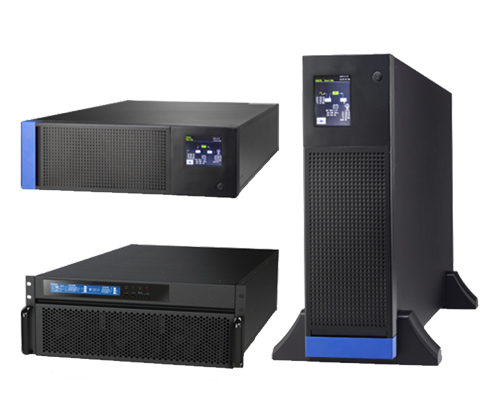
ATTOM delivers stable and reliable uninterruptible power protection for data centers and critical IT loads. Built on an online double-conversion architecture and digital control technology, the AgilePower UPS effectively isolates grid disturbances and continuously supplies high-quality power. It is well suited for a wide range of applications, from edge facilities to core data centers.
With a modular and rack-mounted design, AgilePower UPS supports flexible deployment and scalable capacity expansion. While ensuring power reliability, it also enhances ease of operation and maintenance and improves energy efficiency, providing a robust and sustainable power foundation for modern data centers.
Leave A Comment
You must be logged in to post a comment.