

For more than a decade, air cooling has been the “default answer” for data centers. It is mature, reliable, well understood, and has supported large-scale growth from traditional enterprise IT to early cloud computing. However, as computing paradigms evolve—higher-power chips, more centralized workloads, and denser deployment models—cooling has gradually shifted from a supporting system to a design constraint.
Against this backdrop, immersion liquid cooling is no longer just a laboratory concept. It is now being seriously evaluated—and in some cases formally deployed—by an increasing number of data centers as a viable cooling approach.
What Is Immersion Cooling?
Immersion cooling, as the name suggests, involves operating servers or IT components while fully submerged in a non-conductive cooling liquid. Heat is efficiently removed through direct contact between the liquid and heat-generating components. The most significant difference from traditional cooling methods is that heat no longer relies on air as the transfer medium. As a result, elements such as fans, airflow paths, and hot/cold aisle designs are greatly simplified or eliminated altogether.
In simple terms, if air cooling is like “blowing air to remove heat,” immersion cooling is more like “soaking the heat directly in liquid” (though, of course, not water).
How Does Immersion Cooling Work?
In a typical immersion cooling system, servers are installed in dedicated tanks or enclosures and operate fully submerged in dielectric fluid. Key heat-generating components—such as chips, memory, and power supplies—transfer heat directly to the surrounding liquid during operation.
Heat is then removed through one of the following approaches:
Single-phase systems:
The heated coolant is pumped to a heat exchanger, where the heat is transferred to a secondary cooling loop (such as chilled water or dry coolers), before flowing back into the tank.
Two-phase systems:
The coolant absorbs heat at the chip surface and undergoes a phase change (boiling). The vapor then condenses in a condenser and returns as liquid, enabling highly efficient heat circulation.
Throughout this process, no internal server fans are required, and the system does not depend on data hall airflow management.
Main Types of Immersion Cooling
Immersion liquid cooling has become a critical technology for modern data centers as computing power density continues to rise. Among the available approaches, single-phase and two-phase immersion liquid cooling are the two primary system architectures. The comparison below highlights their differences in efficiency, complexity, and ideal use cases.
| Category | Single-Phase Immersion Liquid Cooling | Two-Phase Immersion Liquid Cooling |
|---|---|---|
| Overview | Uses a dielectric fluid that remains in a liquid state at all times, with heat removed through continuous fluid circulation. | Utilizes the latent heat of fluid phase change to remove heat, allowing more heat dissipation per unit volume. |
| Key Characteristics |
|
|
| Best-Fit Scenarios |
|
|
| There is no absolute “better” option. The optimal choice depends on project objectives, risk tolerance, and operational capabilities. | ||
4 Core Advantages of Immersion Cooling in Data Centers
Immersion liquid cooling has become a critical technology for modern data centers facing increasing power density. The table below compares single-phase and two-phase immersion cooling systems to help operators select the right solution.
1. More Direct and Efficient Heat Transfer Path
Liquids have significantly higher thermal conductivity than air. Through immersion, heat is transferred directly from the chip surface into the coolant, avoiding the efficiency losses associated with multi-stage heat exchange and airflow management in air-cooled systems. This fundamental physical advantage gives immersion cooling greater thermal headroom under high-power loads and transient heat spikes.
2. High Degree of Decoupling from Air Cooling Systems
Because immersion cooling does not rely on data hall airflow, it provides greater overall design flexibility, including:
-
No dependence on hot/cold aisle or containment structures
-
Reduced reliance on room height and supply/return air paths
-
Simplified requirements for environmental controls such as temperature and humidity
3. Potential for Overall Energy Efficiency Optimization
In immersion cooling architectures, server fan counts can be significantly reduced or even eliminated, fundamentally changing the power consumption profile of IT equipment. At the same time, liquid cooling systems are easier to integrate with high-temperature return water, free cooling, and waste heat recovery solutions, creating additional opportunities to optimize overall data center energy efficiency (PUE).
4. A More Stable Hardware Operating Environment
In sealed or semi-sealed immersion environments, server components are no longer directly exposed to dust, humidity fluctuations, or airborne contaminants. In specific use cases, this more stable and controlled operating environment can help improve long-term hardware reliability and operational consistency.
Four Key Considerations Before Implementing Immersion Cooling
1. Hardware Compatibility and Supply Chain Support
Servers designed for immersion cooling are not simply “dropped into liquid and powered on.” It is essential to verify long-term compatibility between the coolant and server assemblies, motherboards, power supplies, connectors, and critical materials. In addition, confirmation of vendor certification or warranty support for immersion operation is required. In practice, hardware vendors differ significantly in their immersion strategies—some offer mature product lines, while others provide only limited support. These differences directly affect procurement timelines, replacement strategies, and future scalability.
2. Changes to Operational and Maintenance Models
Immersion cooling fundamentally alters day-to-day operations and maintenance workflows. Routine tasks are no longer a simple process of pulling out a server, replacing a component, and reinserting it. Instead, equipment must be removed from liquid, allowed to drain, and serviced in more constrained working conditions. This introduces new requirements for staff training, safety procedures, and tools. Maintenance cadence and fault isolation methods also change, requiring operations teams to adapt to managing equipment in a liquid environment rather than relying on traditional rack-based practices.
3. Long-Term Coolant Management
The coolant itself is a core asset of an immersion cooling system and cannot be treated as a one-time investment. Over time, operators must monitor fluid aging, contamination, evaporation losses, and purity changes, and establish mechanisms for testing, replenishment, and recovery. Different types of coolant vary in cost, environmental compliance, and handling requirements—all of which directly impact long-term operating costs and compliance risk, not just initial purchase price.
4. Facility-Level System Integration
Immersion cooling is not a standalone deployment. It must be integrated with existing or planned data center cooling, water systems, power infrastructure, and monitoring platforms. Decisions around secondary cooling loop integration, heat exchanger selection, and redundancy design all influence overall reliability and scalability. Without system-level planning, introducing immersion tanks alone can lead to interface mismatches or limited expansion capability later on.
Immersion Cooling Is Not the End Point
Liquid cooling does not mark the end of air cooling. In real-world data centers, multiple cooling technologies often coexist over the long term: air cooling, direct-to-chip liquid cooling, and immersion cooling—each serving different workload types and stages of infrastructure evolution.
The key is not simply choosing sides between technologies, but understanding more fundamental questions:
-
How are workload power density and operating characteristics evolving?
-
Has the cooling system already become—or is it about to become—a performance or efficiency bottleneck?
-
What is the data center’s expansion path and technology roadmap over the next three to five years?
Only when these questions are clearly answered does immersion cooling become a technology option with long-term value, rather than a short-lived technical trend.
ATTOM Immersion Cooling–Related Solutions
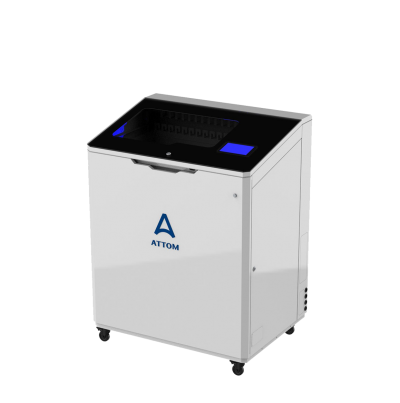
ATTOM provides infrastructure support solutions for liquid-cooled data centers, covering power distribution, rack-level power management, and coordinated deployment with immersion cooling systems. Through stable and scalable power and infrastructure design, ATTOM helps data centers introduce immersion cooling technology while maintaining system reliability, operational continuity, and long-term maintainability—providing a solid foundation for high-density computing environments.
FAQ
Is immersion cooling always more energy-efficient than air cooling?
Not necessarily. Immersion cooling provides higher heat removal capability and greater design flexibility, but actual energy efficiency gains depend on overall system design rather than the cooling technology alone.
Is immersion cooling safe?
When properly designed and operated, immersion cooling is safe—provided suitable dielectric fluids are used and well-defined operational procedures are in place.
Can immersion cooling be deployed in existing data centers?
Yes, but it typically requires assessment and modification of power infrastructure, cooling loops, and physical space. It is most suitable for localized or phased deployment.
Leave A Comment
You must be logged in to post a comment.