

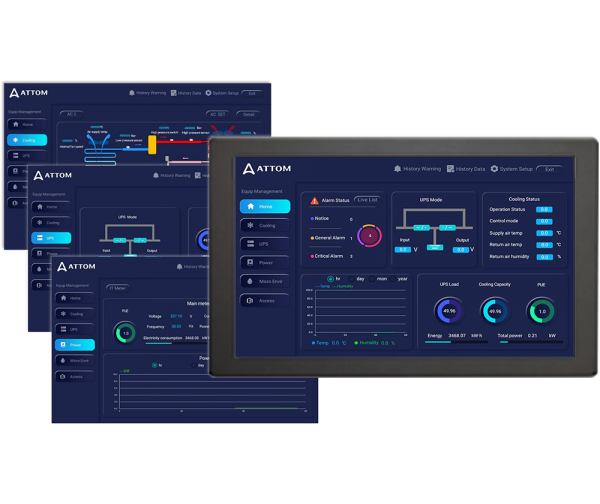
DCIM (Data Center Infrastructure Management) is a category of systems that combines IT management with facility management, providing unified monitoring, administration, and optimization of the physical infrastructure of data centers—including power, cooling, racks, and cabling—as well as IT assets. It goes beyond simply recording where devices are located; it delivers real-time insights into how they are performing and how efficiently they operate.
As IT equipment density continues to rise while power and cooling resources remain limited, DCIM enables operations teams to keep a live view of asset status, resource utilization, and energy consumption—and to intervene before issues escalate.
Why DCIM Matters
Live Monitoring and Alerts
- DCIM continuously monitors servers, switches, UPS units, and power paths. If abnormal temperatures, currents, or network issues occur, the system generates instant alerts and automatically issues work orders to relevant staff.
Better Resource Planning and Utilization
- Operators can see exactly how rack space, power, and cooling capacity are being consumed. Forecasting tools recommend the best way to expand without wasting resources or overbuilding.
Lower Energy Costs and Greener Operations
- Since electricity is often the single biggest expense, DCIM calculates live PUE, analyzes consumption trends, and suggests ways to optimize energy use for sustainability.
Higher Productivity
- By digitizing workflows such as work order dispatch, approvals, and change tracking, DCIM reduces reliance on manual checks and boosts efficiency across the team.
DCIM components & functions
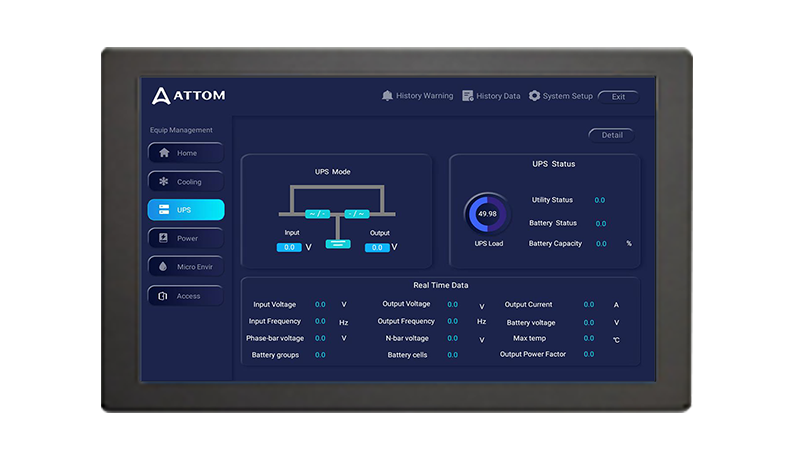
Integration Tools such as APIs that enable the integration between 3rd party CMDBs and ticketing systems.
Monitoring & Data Collection
DCIM continuously collects and monitors the operating status of the data center. This includes environmental parameters such as temperature, humidity, airflow, and water leakage; operational data from power equipment such as UPS, PDUs, and circuits; as well as workload and performance metrics from IT devices like servers and switches. It can also integrate with Building Management Systems (BMS) and IT platforms to enable cross-layer data consolidation and holistic visibility.
Asset Management
With centralized asset management, DCIM records and tracks the full lifecycle of critical components such as racks, servers, switches, power chains, and cabling. It provides clear visibility into device location, connectivity, and resource usage, improving management efficiency while reducing human error.
Capacity Planning
DCIM offers visualized analysis of power, cooling, and space utilization, helping operations teams forecast capacity needs and allocate resources effectively. Whether adding new racks or expanding equipment, the system can simulate scenarios to prevent overbuilding or resource underuse.
Visualization & Reporting
The platform supports 2D/3D visual layouts, interactive dashboards, and multidimensional reports. By transforming large volumes of operational data into intuitive trend insights, it provides managers and operators with clear decision-making references and a quick understanding of data hall conditions.
Workflow & Change Management
DCIM digitizes routine operations and change activities, supporting work order assignment, approval workflows, and operation logs. This reduces the risk of human error, ensures compliance, and improves traceability.
Energy & Efficiency Management
Built-in monitoring of efficiency metrics (such as PUE, CUE, and WUE), combined with operational data analysis, allows DCIM to generate energy-saving recommendations. This helps enterprises lower power costs and advance green data center initiatives.
Integration & Extensibility
DCIM provides open APIs and supports mainstream protocols including SNMP, Modbus, and IPMI. It can be seamlessly integrated with CMDB, ITSM, and BMS platforms, creating a unified digital operations hub and eliminating data silos.
Security Management
DCIM not only focuses on energy efficiency and operations but can also serve as an auxiliary management tool for security and compliance. It monitors data center access controls, video surveillance, and access logs, ensuring that only authorized personnel can enter critical areas. Additionally, by recording operational processes and system changes, DCIM helps data centers meet industry standards and compliance requirements (such as ISO, Uptime, GDPR, etc.).
Leave A Comment
You must be logged in to post a comment.