

Data Center Infrastructure Management (DCIM) is a software framework designed to centrally manage a data center’s physical infrastructure. It brings together information that was traditionally scattered across separate systems and documents—such as asset inventories, power, cooling, environmental conditions, and space capacity—into a single platform. This unified view gives operators a visual, measurable, and predictive understanding of how the data center is running.
In modern data center environments, the true value of DCIM is not simply “adding another system.” Instead, it lies in helping operations teams clearly understand what is happening inside the data center right now—and what is likely to happen next.
Why Data Centers Need DCIM
As data centers grow in size and equipment refresh cycles become shorter, relying solely on manual records or disconnected tools is no longer sufficient for daily operations. Common challenges include inconsistent information, delayed data updates, and capacity decisions based largely on experience rather than facts. These issues become especially risky under high loads or during frequent changes.
DCIM was created to address these real-world challenges. By centralizing data and providing a unified operational view, DCIM allows teams to identify trends before problems occur, rather than reacting after failures happen. This proactive capability is particularly important for modern data centers that prioritize stability, efficiency, and predictability.
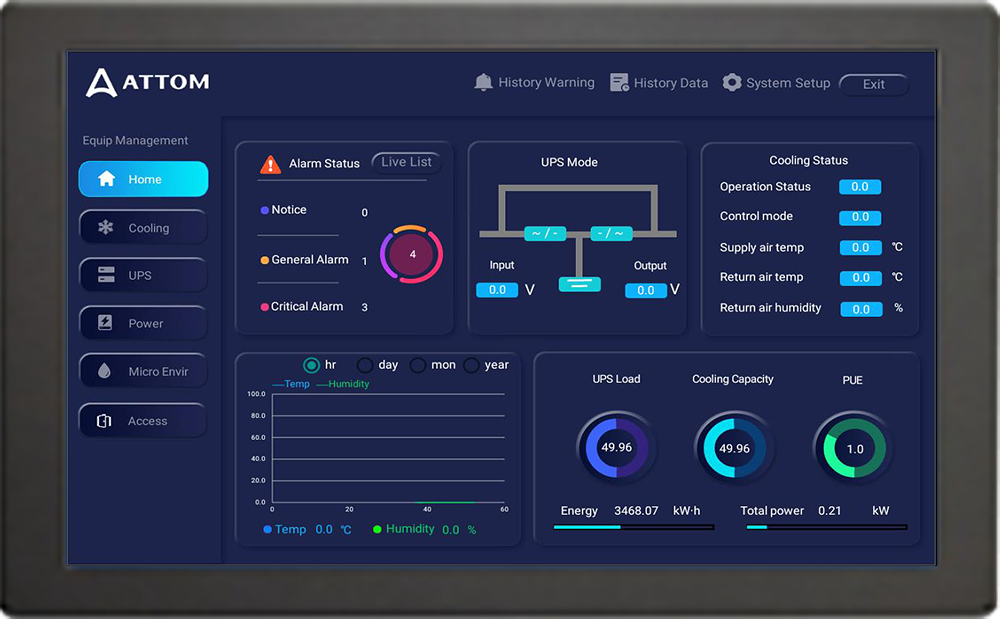
ATTOM:A highly integrated, all-in-one multifunctional DCIM system
Key Components of a DCIM System
A DCIM system is not a single function or dashboard, but a combination of closely connected components that together provide a clear picture of how a data center actually operates. The value of DCIM comes from how these components work together, rather than from any individual feature.
At the foundation is asset and space management. DCIM maintains an accurate, continuously updated record of racks, IT equipment, and their physical locations. This creates a reliable digital representation of the data center, reducing dependence on manual documentation and ensuring that planning decisions are based on current conditions rather than outdated records.
Built on top of this is power and energy monitoring. By collecting real-time data from UPS systems, PDUs, and meters, DCIM makes power consumption visible at a level that aligns with day-to-day operations. Operators can see how loads are distributed, identify imbalance or underutilization, and understand how close infrastructure is operating to its designed limits.
Cooling and environmental monitoring adds another critical layer. Temperature, humidity, and airflow data help teams move beyond general room conditions and focus on what is happening at the rack or zone level. This supports more precise cooling adjustments and helps prevent localized thermal issues that may not be obvious from aggregate data.
Finally, these data streams come together in capacity planning and forecasting. By correlating asset, power, and cooling information, DCIM allows teams to assess whether new equipment can be deployed safely and where constraints are likely to appear. This capability transforms DCIM from a monitoring tool into a planning platform, supporting informed decisions rather than reactive responses.
Key Benefits of Using DCIM
The most immediate benefit of using DCIM is clear, reliable visibility into the physical data center. Instead of relying on fragmented tools or outdated documentation, operators gain a consistent view of assets, power, cooling, and space. This shared visibility reduces uncertainty in daily operations and helps teams work from the same set of facts.
DCIM also significantly reduces operational risk. By continuously monitoring infrastructure conditions and load trends, potential issues—such as power imbalances, thermal stress, or capacity constraints—can be identified early. This shifts operations from reactive problem-solving to proactive risk management, which is especially valuable in environments with high availability requirements.
Another important advantage is better resource utilization. Many data centers are more constrained by perceived limits than actual ones. DCIM exposes usable capacity that might otherwise remain hidden, allowing organizations to deploy new equipment more confidently and delay costly infrastructure expansion.
From an efficiency perspective, DCIM enables more informed energy and cooling decisions. With accurate, granular data, operators can adjust cooling strategies, balance power loads, and evaluate efficiency initiatives based on measured results rather than assumptions. This supports both cost control and sustainability objectives.
Finally, DCIM improves planning and decision-making over time. Whether evaluating new deployments, infrastructure upgrades, or changes in operating strategy, DCIM provides historical context and trend analysis. This transforms infrastructure management from a short-term operational task into a longer-term, data-driven discipline.
DCIM in Modern and Future Data Centers
As data centers evolve toward higher densities and more complex architectures, the role of DCIM continues to expand. Today’s DCIM solutions are not just monitoring tools—they act as a central hub connecting power systems, cooling systems, and IT management platforms.
Whether supporting high-density deployments, liquid cooling environments, or distributed and edge data centers, DCIM offers a unified management approach that allows different data center forms to follow consistent operational logic.
Looking ahead, data centers will increasingly rely on DCIM to maintain stable operations and retain control as infrastructure complexity continues to grow.
Leave A Comment
You must be logged in to post a comment.