

Introduction
AI models are growing at a geometric pace. Training large language models often requires thousands of GPUs running in parallel, with each GPU consuming more than 500 watts—and future chips may even surpass 1,000 watts. Such high energy use drives rack heat density to extreme levels, making traditional air cooling insufficient for managing hotspots. At the same time, data center energy efficiency (PUE) is hitting a ceiling. Many facilities that still rely on conventional air cooling operate with a PUE of 1.6–2.0, where cooling power accounts for an oversized share of energy consumption.Global sustainability goals add further complexity. According to the International Energy Agency (IEA), data centers accounted for 2% of the world’s total electricity consumption in 2023. The rise of AI is pushing this curve even higher.
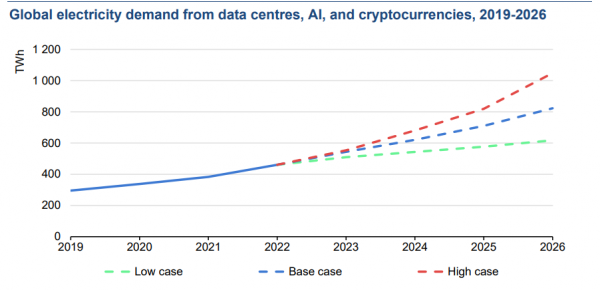
The challenge is clear: how to sustain high compute capacity while operating in a low-carbon, environmentally responsible way.
In this context, traditional air cooling is running out of headroom—while the Hybrid Cooling System is emerging as a new answer for data centers and AI infrastructure.
Thermal Challenges in the AI Era
In the past, data centers largely depended on air circulation to dissipate heat. Today’s GPUs, however, far exceed the heat density of earlier generations. Power levels above 500 watts per card are common, and 1,000-watt GPUs are no longer far-fetched.
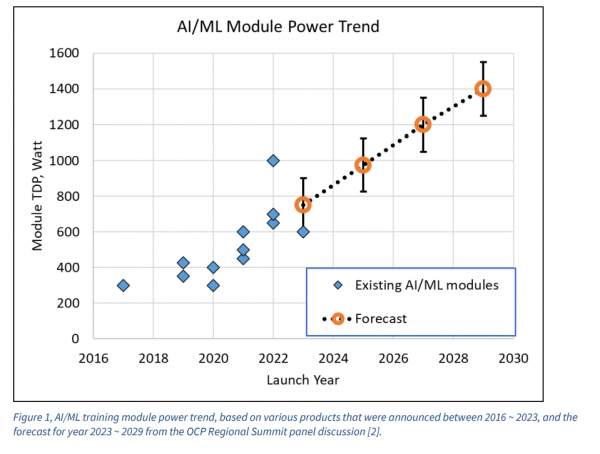
This performance leap has amplified the “heat island effect” inside racks, where air cooling struggles to manage localized hotspots effectively.
Energy efficiency remains a pain point. Uptime Institute research shows that about half of data centers still have a PUE around 1.6. In other words, even as hardware advances, cooling efficiency remains a heavy burden.
Zooming out to sustainability, the pressure becomes even greater. IEA data shows that with the growth of AI accelerators, storage, and networking equipment, data center power demand is diversifying rapidly.
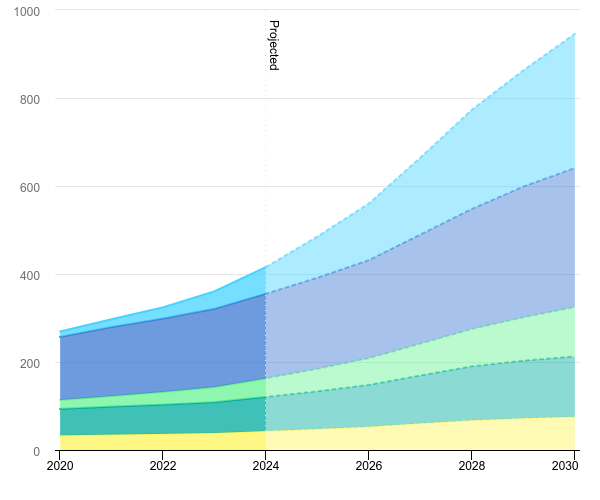
This raises a tough question for global carbon-neutral targets: does AI growth inevitably mean higher environmental costs?
Advantages of Hybrid Systems
Many data center operators have found that hybrid cooling is more than just “temperature control”—it is a comprehensive energy optimization strategy. The introduction of liquid cooling precisely eliminates risk points in high-heat components, reducing downtime caused by overheating. Meanwhile, the presence of air cooling keeps overall airflow balanced, preventing hot and cold imbalances.
Case studies from the U.S. Lawrence Berkeley National Laboratory and ASHRAE show that hybrid cooling not only improves energy efficiency but also enhances equipment stability and extends hardware lifespan. This makes it a preferred choice for many enterprises pursuing ESG goals.
Industry Applications and Case Studies
Leading companies are already moving forward:
-
Google has integrated liquid cooling into its TPU clusters while maintaining air cooling for ambient stability, enabling much higher compute densities.
-
Meta has adopted hybrid cooling in similar contexts, aiming not only to reduce energy consumption but also to lower its carbon footprint.
-
In supercomputing, Europe’s LUMI supercomputer employs a sophisticated liquid + air hybrid architecture, achieving both performance and energy efficiency gains.
Meeting AI’s Future Demands
As AI continues to evolve, hybrid cooling will only grow in importance. With GPUs approaching—and soon exceeding—the 1,000-watt threshold, hybrid solutions are the only way to balance cost and performance.
Equally important, intelligent O&M will make hybrid cooling more proactive. With AI-driven monitoring, cooling strategies can dynamically adapt to workload changes, enabling true “self-optimizing” data centers.
From a policy perspective, sustainability is becoming a hard requirement. In Europe, carbon-neutral targets are now embedded into data center regulations. This makes hybrid cooling not just a technology trend, but a dual driver shaped by both regulation and market forces.
ATTOM’s Role and Solutions
At ATTOM, we focus on helping enterprises meet the twin challenges of efficiency and cooling in the AI era. We deliver customized hybrid cooling architectures, combined with energy optimization consulting and sustainable data center design, ensuring that customers maintain compute stability while cutting operational energy costs.
By integrating liquid cooling technologies, intelligent airflow control, and automated energy management, we help build infrastructure that is future-ready. Our mission is simple: enable our customers to stay ahead in performance while achieving their long-term sustainability goals in the age of AI.
Leave A Comment
You must be logged in to post a comment.