Definition
Precision Cooling is a cooling and environmental control approach designed specifically for data centers, server rooms, and other IT environments where temperature, humidity, airflow, and equipment operating conditions must be carefully controlled.
Unlike comfort cooling, which is designed primarily to maintain comfortable conditions for people, precision cooling is designed to continuously remove heat generated by IT equipment and maintain stable operating conditions for critical systems.
Precision cooling systems are commonly engineered for continuous operation, high sensible cooling loads, controlled airflow, and reliable performance in mission-critical environments.
Key Characteristics
Precision cooling typically focuses on:
- Temperature control — maintaining suitable and stable conditions for IT equipment.
- Humidity control — managing moisture levels to reduce the risk of condensation or electrostatic discharge.
- Airflow management — delivering conditioned air to equipment and managing hot and cold air paths.
- High sensible cooling capacity — focusing on the removal of heat generated directly by IT equipment.
- Continuous operation — supporting data center environments that operate around the clock.
- Reliability and redundancy — providing cooling capacity and system resilience appropriate for critical infrastructure.
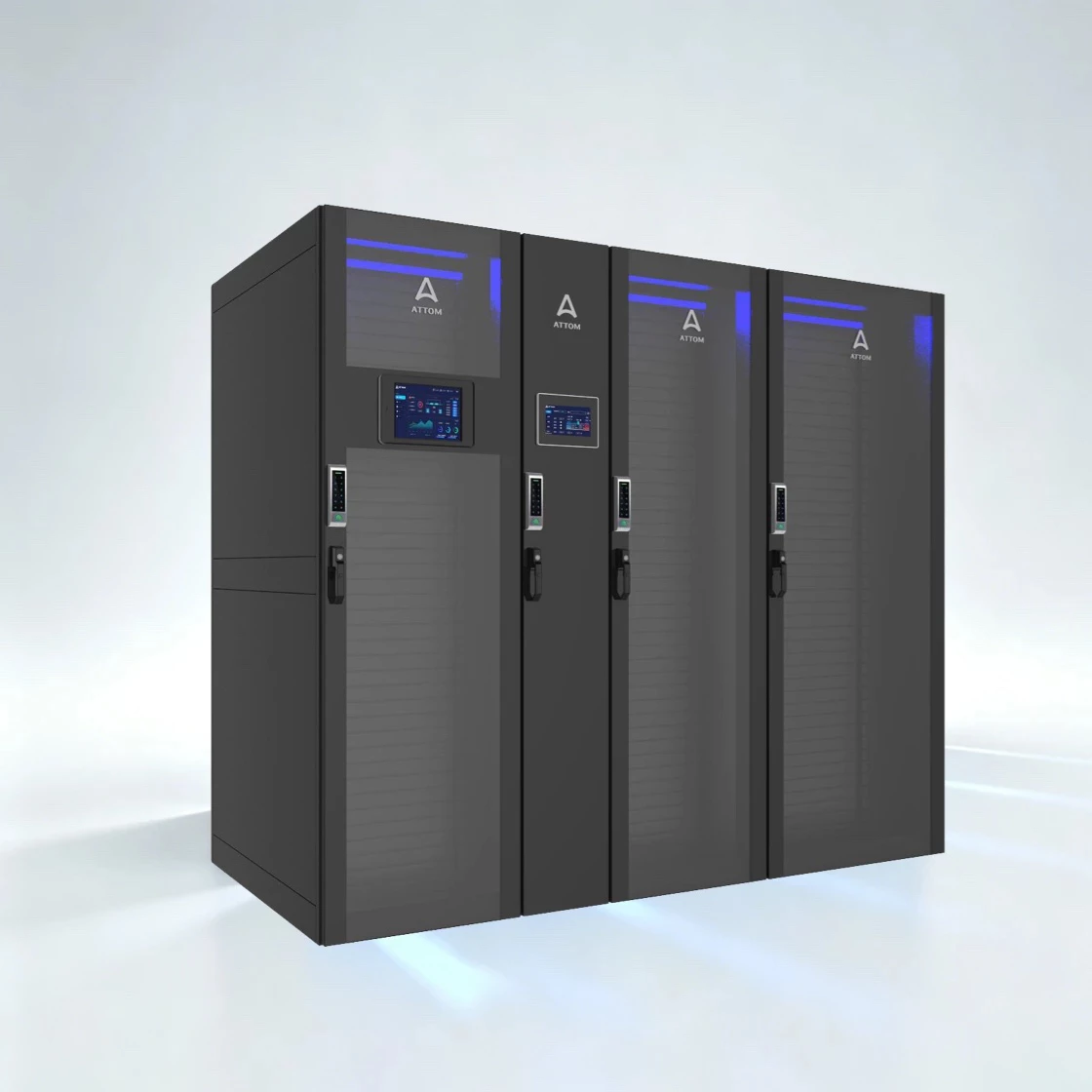
Precision cooling equipment may include CRAC (Computer Room Air Conditioning) and CRAH (Computer Room Air Handler) systems, as well as close-coupled and other specialized cooling configurations.
Precision Cooling vs. Comfort Cooling
The main difference is the environment and heat load each system is designed to manage.
| Precision Cooling | Comfort Cooling | |
|---|---|---|
| Primary purpose | Protect and cool IT equipment | Maintain human comfort |
| Heat load | High and relatively continuous | Variable and occupancy-dependent |
| Operation | Designed for continuous operation | Typically operates according to occupancy and environmental conditions |
| Environmental control | Tighter control of temperature, humidity, and airflow | Primarily focused on occupant comfort |
| Typical applications | Data centers, server rooms, telecom facilities | Offices, retail, residential and commercial spaces |
Precision cooling is therefore not simply a more powerful version of conventional air conditioning. It is designed around the thermal characteristics and operating requirements of IT equipment.
Precision Cooling Technologies
Precision cooling can be implemented using different architectures depending on IT load density, facility design, and environmental conditions.
Common approaches include:
- CRAC and CRAH systems for room-level cooling
- In-row cooling for closer coupling between cooling equipment and server racks
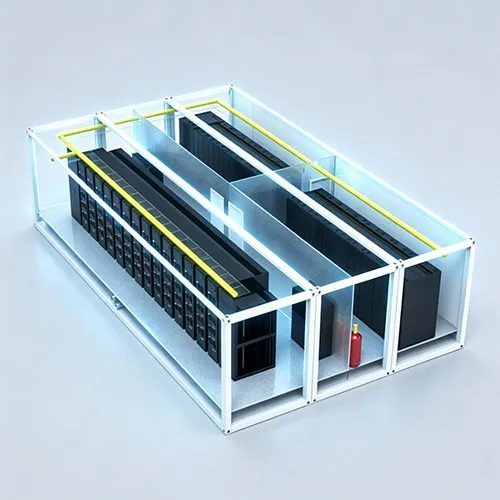
- Air containment such as hot-aisle and cold-aisle containment
- Close-coupled cooling for higher-density IT environments
- Liquid cooling for applications where air cooling is no longer sufficient
The appropriate approach depends on rack density, heat load, airflow design, available power and cooling infrastructure, and the required level of redundancy.
Precision Cooling and High-Density Computing
As server and AI accelerator power densities increase, traditional room-level air cooling can become less effective for removing heat from high-density racks.
Precision cooling remains an important part of data center thermal management, but high-density environments may require close-coupled cooling or liquid cooling to bring heat removal closer to the source.
This creates a practical progression:
Room-Level Precision Cooling → Close-Coupled Cooling → Liquid Cooling
The transition depends on rack power density, equipment requirements, facility constraints, and the thermal architecture of the data center.
Why Precision Cooling Matters
Reliable cooling is essential to maintaining the performance, availability, and operating life of IT equipment.
A well-designed precision cooling system helps data centers maintain stable environmental conditions, manage concentrated heat loads, reduce thermal hotspots, and support continuous operation.
For modern AI and high-density computing environments, precision cooling also provides the foundation for integrating more advanced thermal management technologies as rack power densities increase.
Related Terms
- Data Center Cooling
- CRAC
- CRAH
- In-Row Cooling
- Hot-Aisle Containment
- Liquid Cooling
- Direct-to-Chip Cooling
- High-Density Computing
- Thermal Management
- PUE
Related ATTOM Solutions
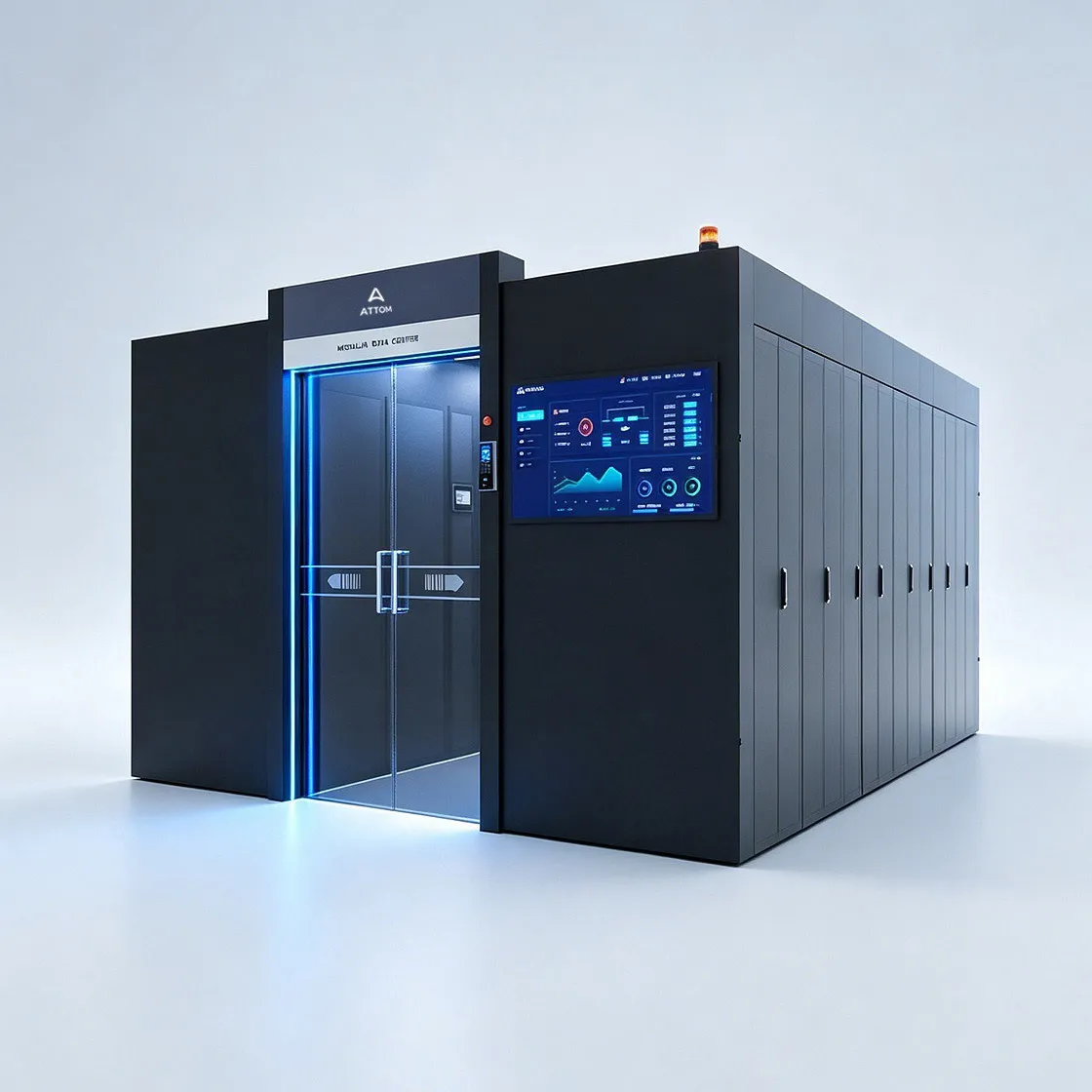
ATTOM provides precision cooling and thermal management solutions for data centers, including precision air conditioning, close-coupled cooling, liquid cooling, and cooling solutions for high-density AI infrastructure.
Explore ATTOM’s Precision Cooling Solutions for data center environments with demanding thermal management requirements.