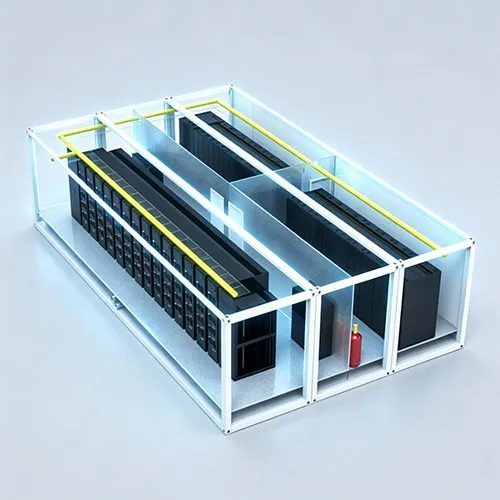
Hot Aisle Containment (HAC) is an airflow management technique that fully encloses the hot aisle between opposing rows of server cabinets. Hot exhaust air leaving the rear of the servers is captured within the contained space and returned directly to the cooling units, preventing it from mixing with the cold supply air in the data hall.
Advantages of the Hot Aisle
- Improved cooling efficiency — cold supply air is not diluted by hot exhaust, allowing cooling units to operate more effectively.
- Higher allowable supply-air temperatures — this expands the operating window for free cooling and reduces mechanical cooling energy.
- Support for higher rack densities — better thermal separation enables denser GPU Server and AI Accelerator deployments without creating hotspots.
- Reduced fan energy — both server and CRAC/CRAH fans can run at lower speeds when airflow paths are optimized.
Hot Aisle Containment and ATTOM
Hot Aisle Containment is commonly implemented with solid roofs, doors, and vertical panels that form a sealed corridor. It is frequently combined with In-Row Cooling, traditional CRAC/CRAH units, or hybrid liquid-cooling architectures.
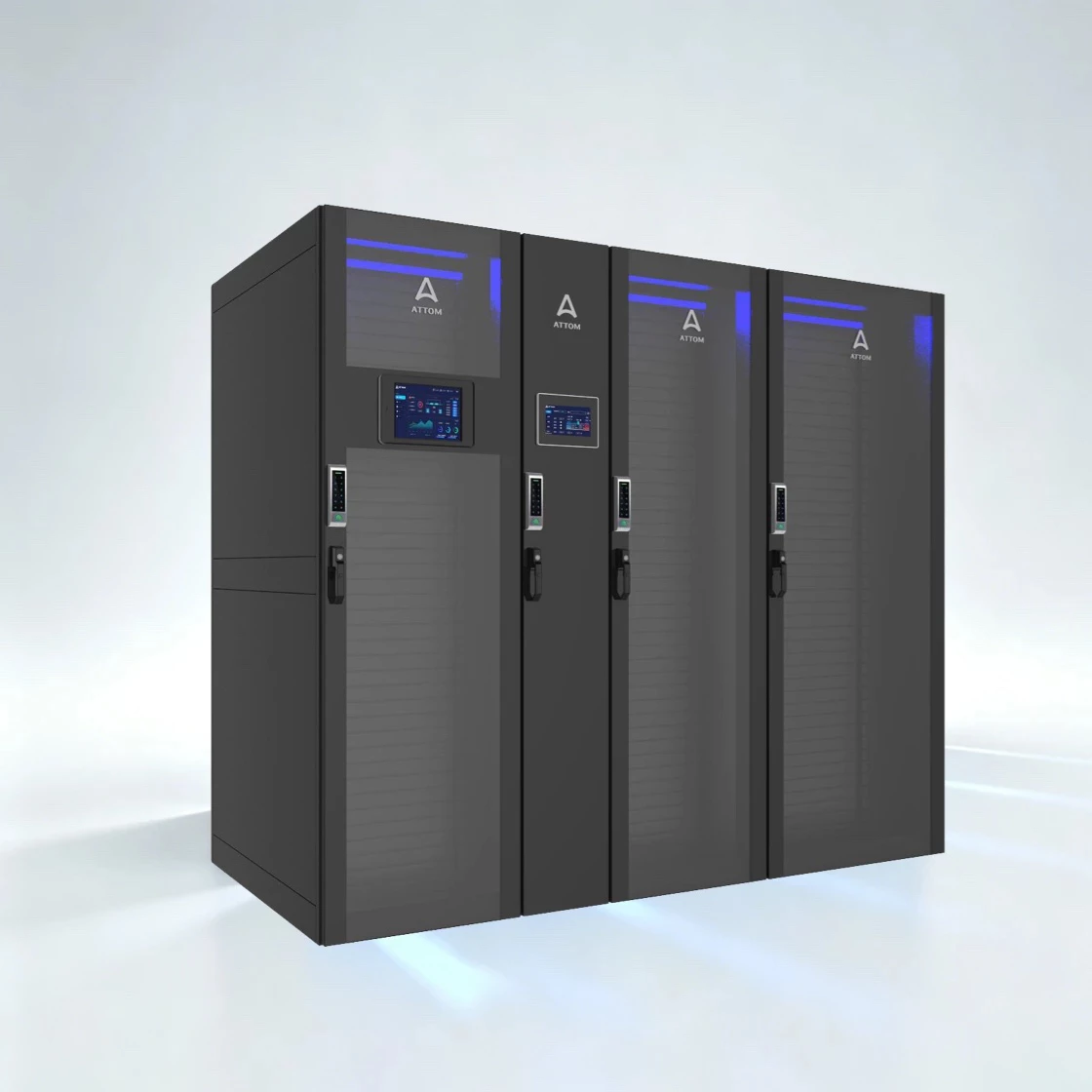
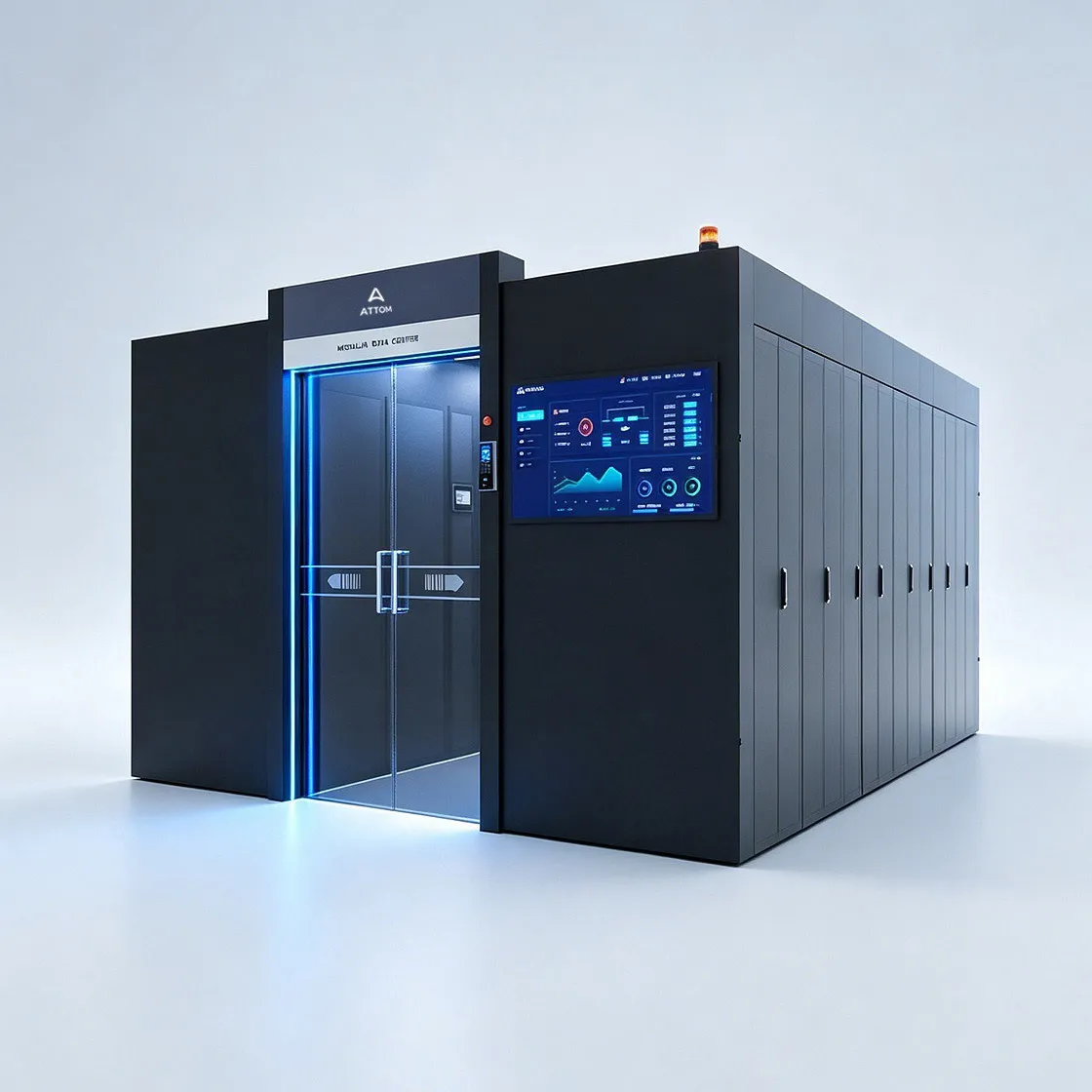
Attom Technology’s modular containment solutions (such as AgileMod) and precision cooling platforms (WiseAir and SmoothAir) are designed to integrate seamlessly with Hot Aisle Containment strategies. When paired with liquid cooling options like ByteCool or OceanCool, these systems help customers achieve higher densities, lower PUE, and more stable thermal conditions in both enterprise and AI-ready environments.
Related Terms
- Cold Aisle Containment
- CRAC
- CRAH
- High-Density Computing
- PUE (Power Usage Effectiveness)
- Liquid Cooling