Definition
Air Cooling is a data center cooling method that uses air as the primary heat transfer medium to remove heat generated by IT equipment and maintain suitable operating conditions.
In a typical air-cooled data center, cooling equipment supplies conditioned air to IT equipment, where the air absorbs heat before the warmed air is returned to the cooling system.
Air cooling is widely used for conventional and low- to medium-density computing environments and remains an important part of modern data center cooling architectures.
How Air Cooling Works
A typical air cooling system follows a continuous airflow cycle:
- Cooling equipment supplies conditioned air to the IT environment.
- The air passes through servers and absorbs heat generated by IT equipment.
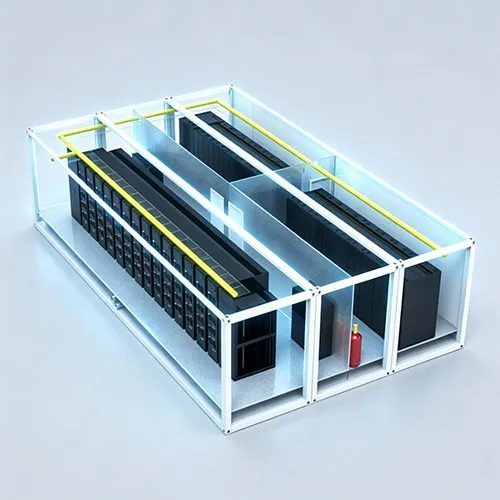
- Warm exhaust air is separated from the supply air through airflow management.
- The return air is collected and cooled before being supplied back to the IT environment.
The effectiveness of air cooling depends not only on the cooling equipment itself, but also on airflow distribution, rack arrangement, containment, and temperature control.
Key Air Cooling Technologies
CRAC (Computer Room Air Conditioner)
CRAC units typically use a refrigeration-based cooling system to condition air for data center environments.
CRAH (Computer Room Air Handler)
CRAH units use a cooling coil, typically supplied by a centralized chilled water system, to cool and circulate air.
Airflow Management
Airflow management technologies control the movement of supply and return air to reduce unwanted mixing and improve cooling efficiency.
Common approaches include:
- Hot aisle / cold aisle layout
- Hot aisle containment
- Cold aisle containment
- Raised-floor or overhead air distribution
- Airflow optimization
Air Cooling in Data Centers
Air cooling is commonly deployed in:
- Enterprise data centers
- Colocation facilities
- Server rooms
- Edge data centers
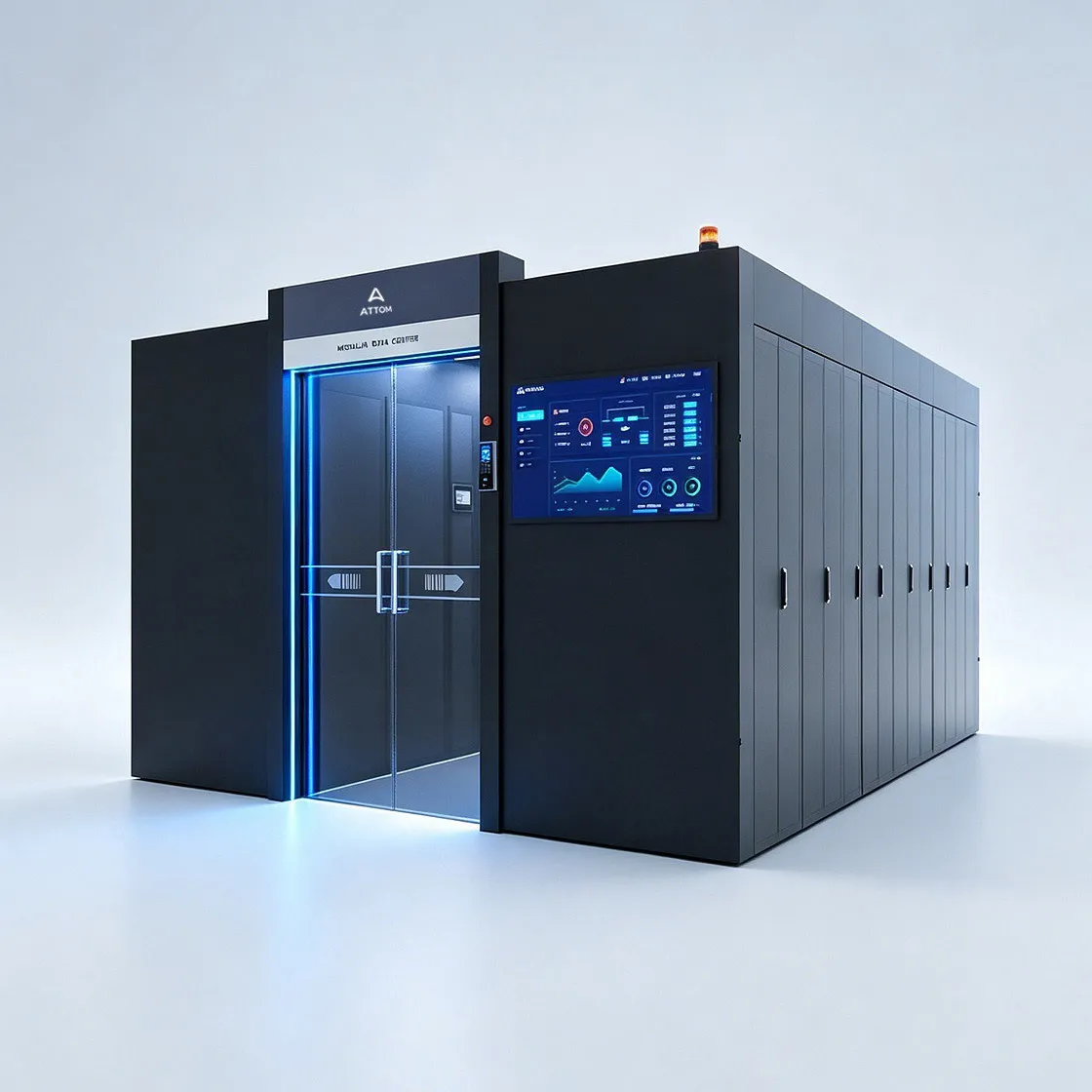
- Modular data centers
- General-purpose computing environments
Its broad adoption is supported by established infrastructure, familiar operating practices, and compatibility with conventional server and networking equipment.
Effective airflow management is essential as rack density increases. Poor separation between supply and return air can create hotspots, increase fan and cooling energy consumption, and reduce the effective capacity of the cooling system.
Air Cooling and High-Density Computing
Air cooling remains effective for many conventional IT workloads, but increasing rack power density can create thermal and airflow constraints.
AI and HPC workloads can generate substantially higher heat loads than traditional enterprise computing. As rack density increases, maintaining acceptable server inlet temperatures through air alone may require greater airflow volume, higher fan power, and increasingly sophisticated airflow management.
For higher-density applications, data centers may therefore adopt liquid cooling or hybrid cooling architectures alongside air cooling.
In a hybrid architecture, air cooling can continue to handle conventional IT loads and residual room heat while liquid cooling addresses high-density components or racks.
Air Cooling vs. Liquid Cooling
| Feature | Air Cooling | Liquid Cooling |
|---|---|---|
| Primary Heat Transfer Medium | Air | Liquid |
| Typical Application | Conventional and low- to medium-density IT | High-density and AI/HPC workloads |
| Heat Removal Capability | Limited by airflow and air properties | Higher heat transfer capability |
| Infrastructure | CRAC, CRAH, airflow distribution | CDU, cold plates, manifolds, or immersion systems |
| High-Density Suitability | Increasingly constrained at very high rack densities | Well suited to high-density workloads |
Air cooling and liquid cooling are not necessarily mutually exclusive. Many modern data centers use a hybrid cooling strategy in which different cooling methods are matched to different rack densities and workload requirements.
Why Air Cooling Still Matters
Despite the growth of liquid cooling, air cooling remains an important foundation of data center thermal management.
Its continued role is supported by:
- Broad compatibility with conventional IT equipment
- Established cooling infrastructure
- Familiar operation and maintenance practices
- Flexible deployment across different facility types
- Ability to support many low- and medium-density workloads
The key consideration is not whether air cooling is universally sufficient, but whether the cooling architecture can efficiently match the thermal density and workload requirements of the IT environment.
Related Terms
- Data Center Cooling
- Precision Cooling
- CRAC
- CRAH
- In-Row Cooling
- Hot-Aisle Containment
- Liquid Cooling
- Direct-to-Chip Cooling
- High-Density Computing
- Thermal Management
- PUE
Related ATTOM Solutions
ATTOM provides data center cooling solutions covering precision air cooling and high-density liquid cooling architectures for modern data center environments.
Explore ATTOM’s Precision Cooling and Liquid Cooling solutions for applications ranging from conventional enterprise infrastructure to high-density AI computing.