A Liquid Cooling Manifold is a critical distribution component in liquid cooling systems that channels coolant from a central source (typically a CDU) to multiple cold plates or servers and returns the heated fluid. It serves as the primary branching interface between the facility or rack-level cooling loop and the individual server cooling circuits.
Design Features :
- Even flow distribution: Ensures balanced coolant delivery to each cold plate or server to maintain consistent thermal performance across the rack.
- Serviceability: Incorporates quick-disconnect couplings that allow individual servers or cold plates to be isolated and removed without draining the entire system.
- Pressure and temperature management: Designed to minimize pressure drop while handling the flow rates and temperatures required by high-power GPU Servers and AI Accelerators.
- Material compatibility: Typically constructed from stainless steel or specialized polymers that resist corrosion and remain compatible with common coolants (water-glycol mixtures or dielectric fluids).
In Direct-to-Chip deployments, the manifold is usually mounted at the rear or top of the rack and forms the backbone of the secondary cooling loop. Proper manifold design directly affects cooling reliability, maintainability, and the ability to scale to higher rack densities.
Liquid Cooling Manifold and ATTOM
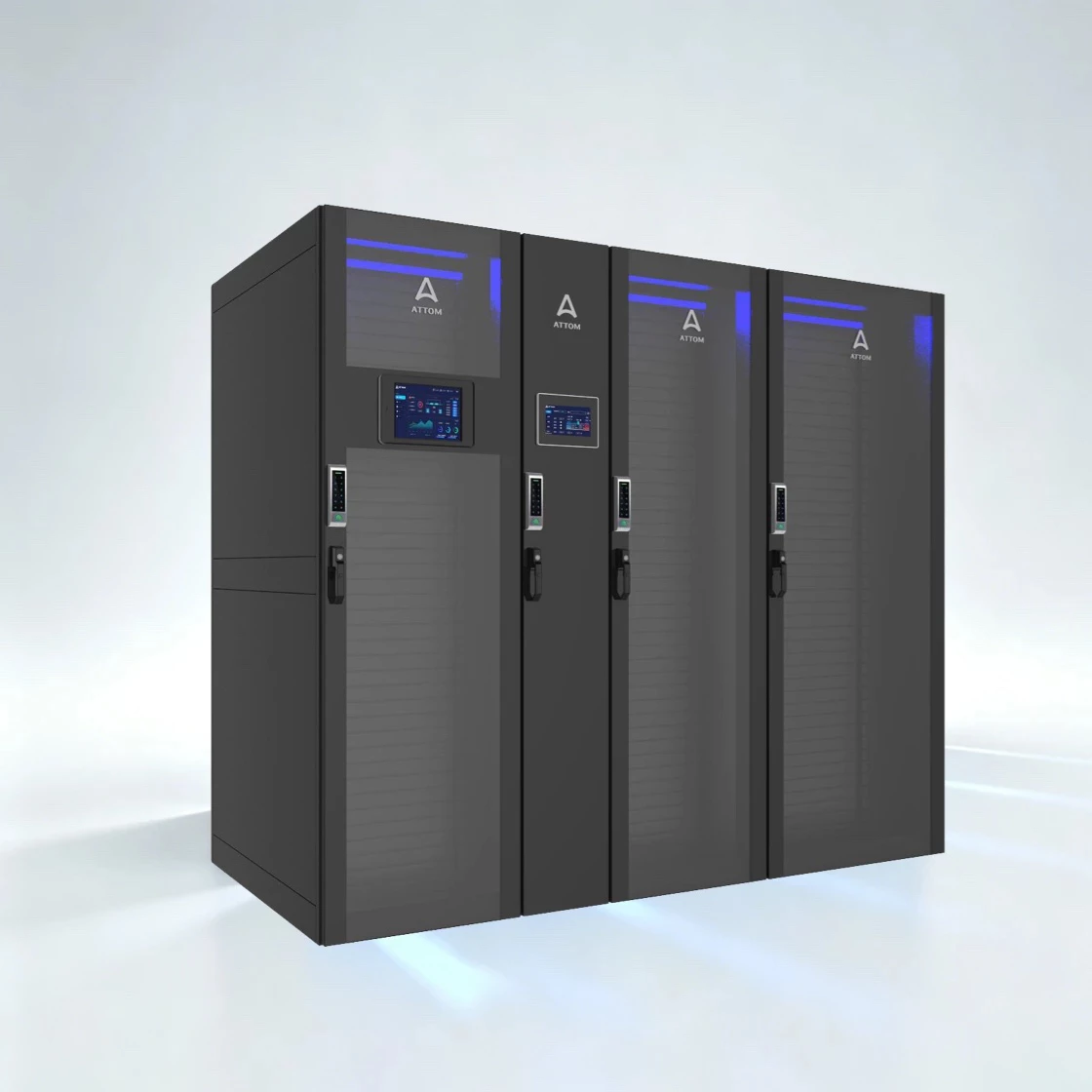
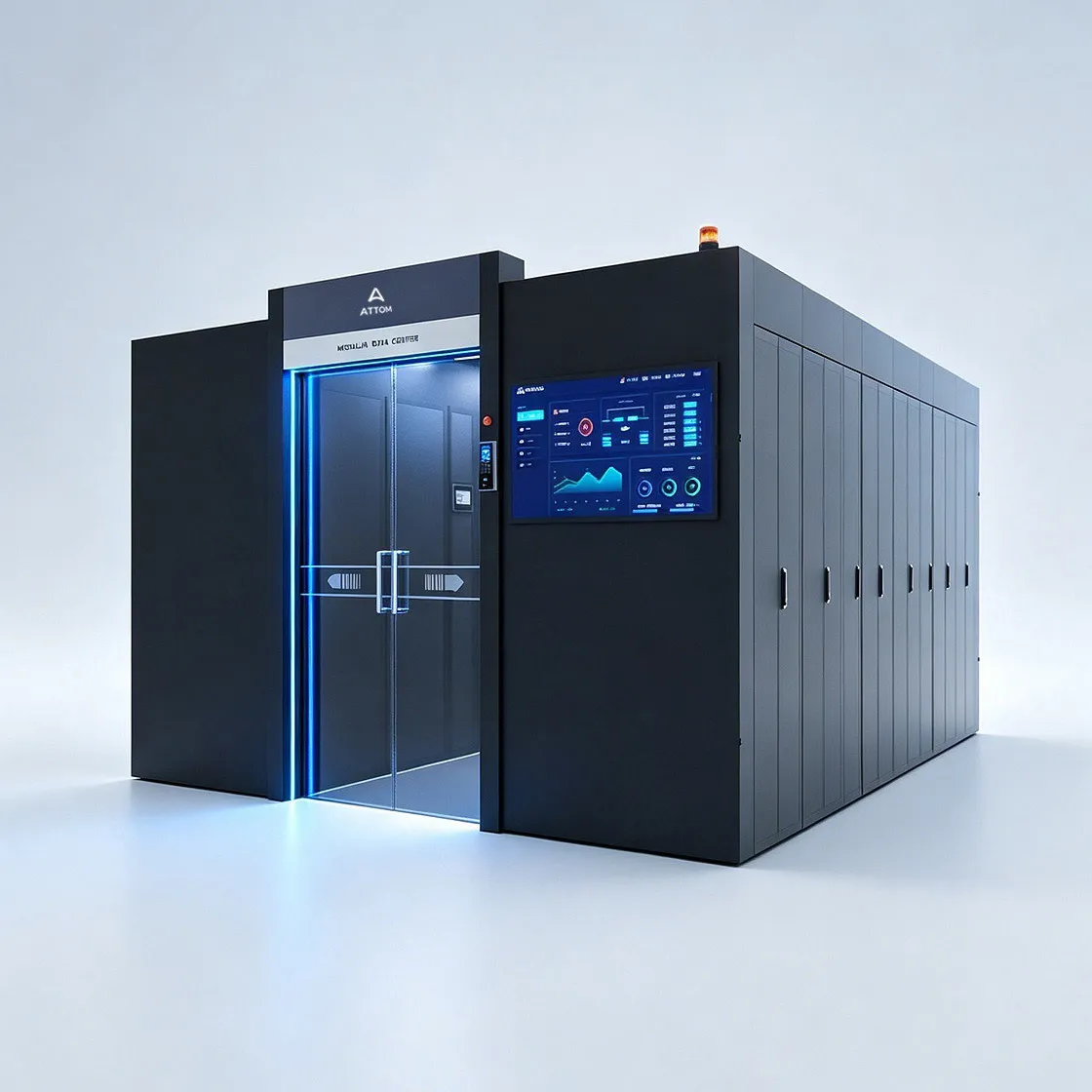
Within Attom Technology’s liquid cooling architecture, manifolds are engineered as integral parts of the ByteCool Direct-to-Chip solution. They enable clean, balanced coolant delivery across dense racks while supporting rapid server maintenance—key requirements when deploying high-density compute inside AgileCore modular data centers.
Related Terms
- CDU (Coolant Distribution Unit)
- Direct-to-Chip Liquid Cooling
- Cold Plate
- Liquid Cooling
- Immersion Cooling
- High-Density Data Center