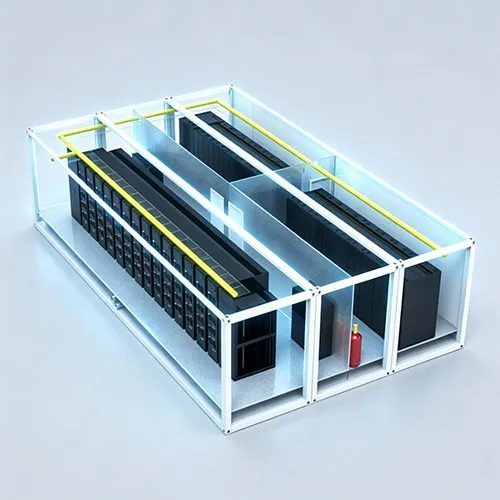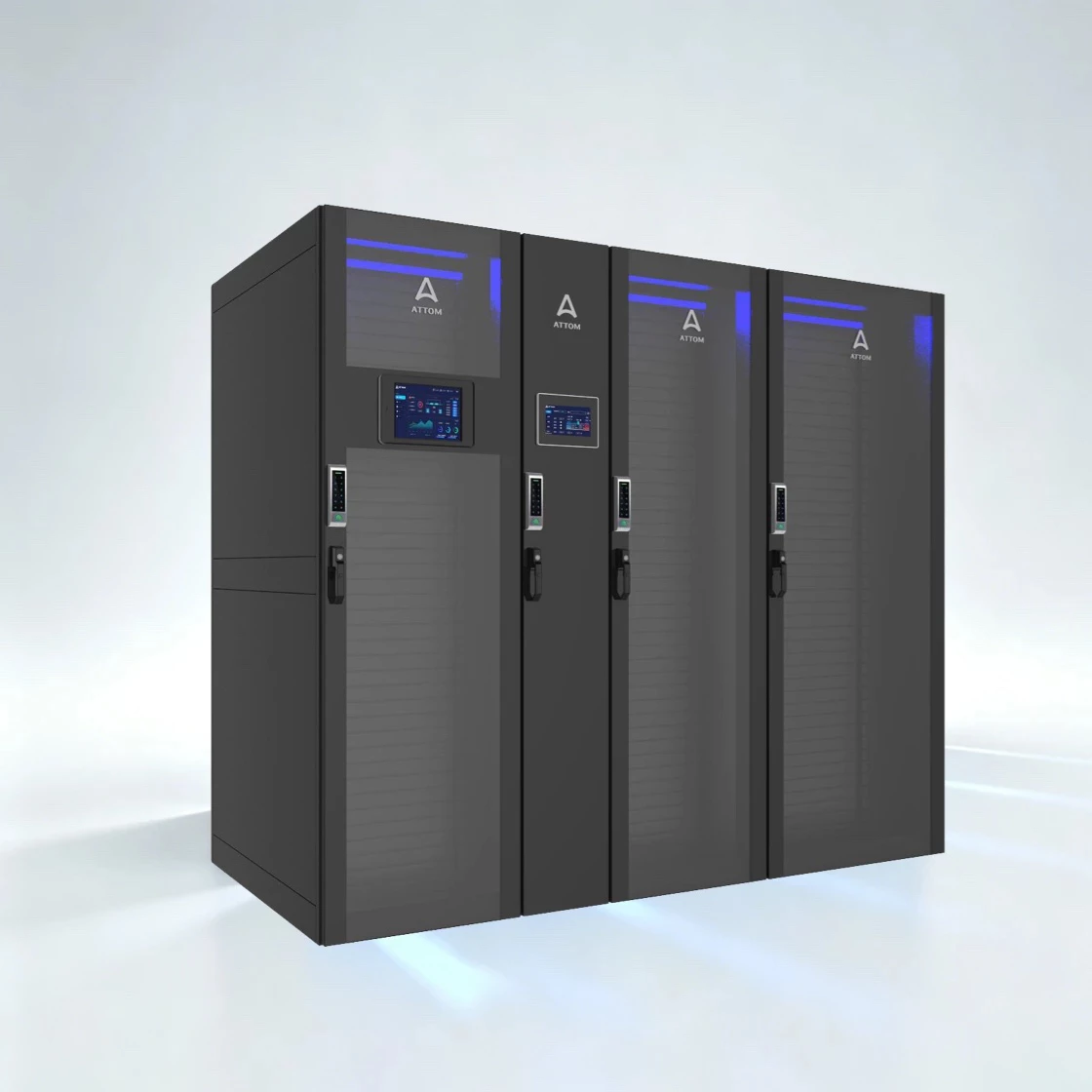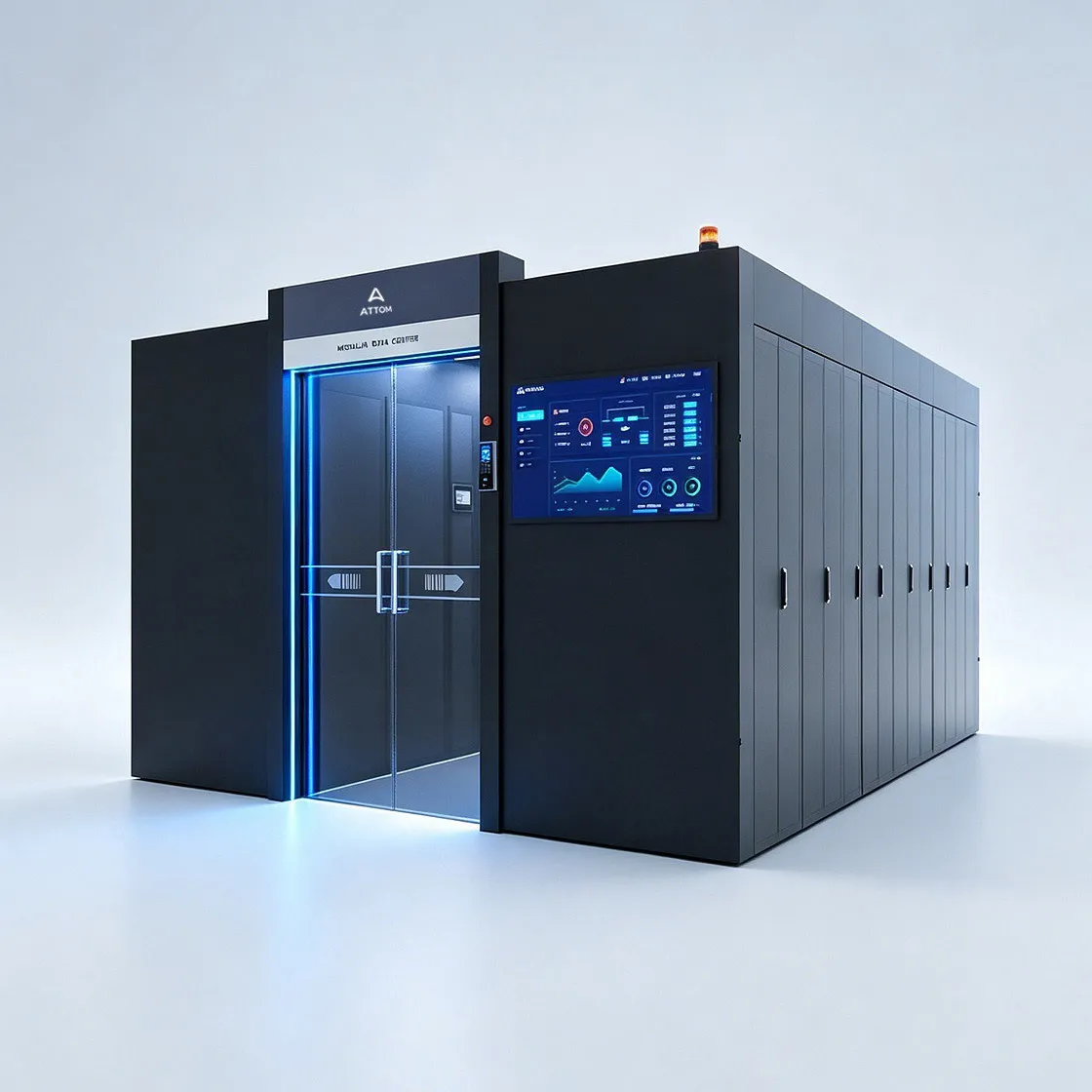
A Container Data Center is a prefabricated data center solution built within a standardized shipping container or purpose-built containerized enclosure. It integrates IT racks, power distribution, cooling, monitoring, security, and other critical infrastructure into a compact, factory-engineered system.
Unlike a traditional site-built data center, a container data center can be assembled and tested before delivery, reducing the amount of on-site construction and system integration required. Its standardized form factor also supports rapid deployment and modular capacity expansion.
Key Characteristics
A container data center typically combines several characteristics:
- Prefabricated: Major infrastructure systems are assembled and integrated before deployment.
- Compact: IT, power, cooling, and monitoring systems are designed to operate within a constrained footprint.
- Rapidly deployable: Factory integration can reduce on-site installation and commissioning work.
- Scalable: Additional containerized modules can be deployed as computing requirements grow, subject to site power, cooling, and space constraints.
- Flexible: Containerized systems can support edge, remote, telecom, enterprise, and other distributed computing environments.
A container data center is not necessarily a temporary facility. It can serve as permanent infrastructure when its power, cooling, redundancy, environmental protection, and site requirements are properly engineered.
Common Applications
Container data centers are commonly used for:
- Edge computing
- AI and high-density computing
- Remote and distributed infrastructure
- Telecom and network deployments
- Enterprise capacity expansion
- Disaster recovery and backup infrastructure
- Rapidly deployable computing capacity
The appropriate configuration depends on the workload, IT capacity, site conditions, power availability, cooling requirements, and expected expansion.
Container Data Center vs. Modular Data Center
A Container Data Center is a type of Modular Data Center, but the two terms are not interchangeable.
Modular Data Center is the broader category covering different prefabricated and factory-integrated architectures. A container data center specifically uses a containerized or purpose-built enclosure as its physical deployment platform.
This distinction is useful when evaluating deployment architecture, scalability, site requirements, and physical constraints.
Related Terms
- Modular Data Center — The broader category of prefabricated and modular data center architectures.
- Prefabricated Data Center — A broader concept focused on factory-manufactured and pre-integrated data center infrastructure.
- Micro Data Center — A compact data center architecture commonly used for edge and distributed computing.
- Edge Data Center — A data center deployed closer to users, devices, or data sources to reduce latency.
- AI Data Center — Data center infrastructure optimized for AI and high-performance computing workloads.
Related ATTOM Solutions
ATTOM provides Container Data Center solutions for AI infrastructure, edge computing, telecom, enterprise IT, and remote deployments.
AgileCub is ATTOM’s container data center solution, integrating IT space, power, cooling, monitoring, and other supporting infrastructure into a prefabricated modular platform.
Learn More
For a deeper technical overview, read ATTOM’s Container Data Center: Definition, Benefits, Cost & Deployment Guide.
The guide covers container data center architecture, deployment characteristics, power and cooling systems, scalability, applications, and engineering considerations.