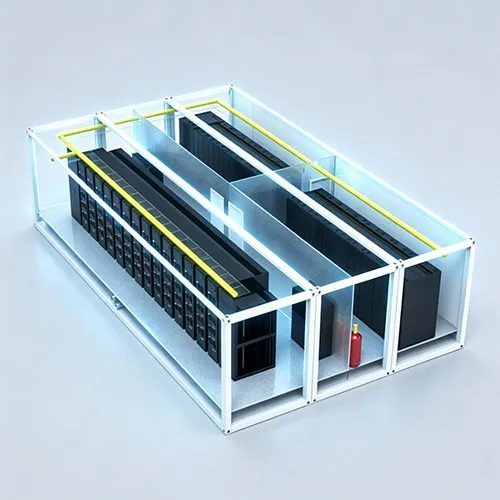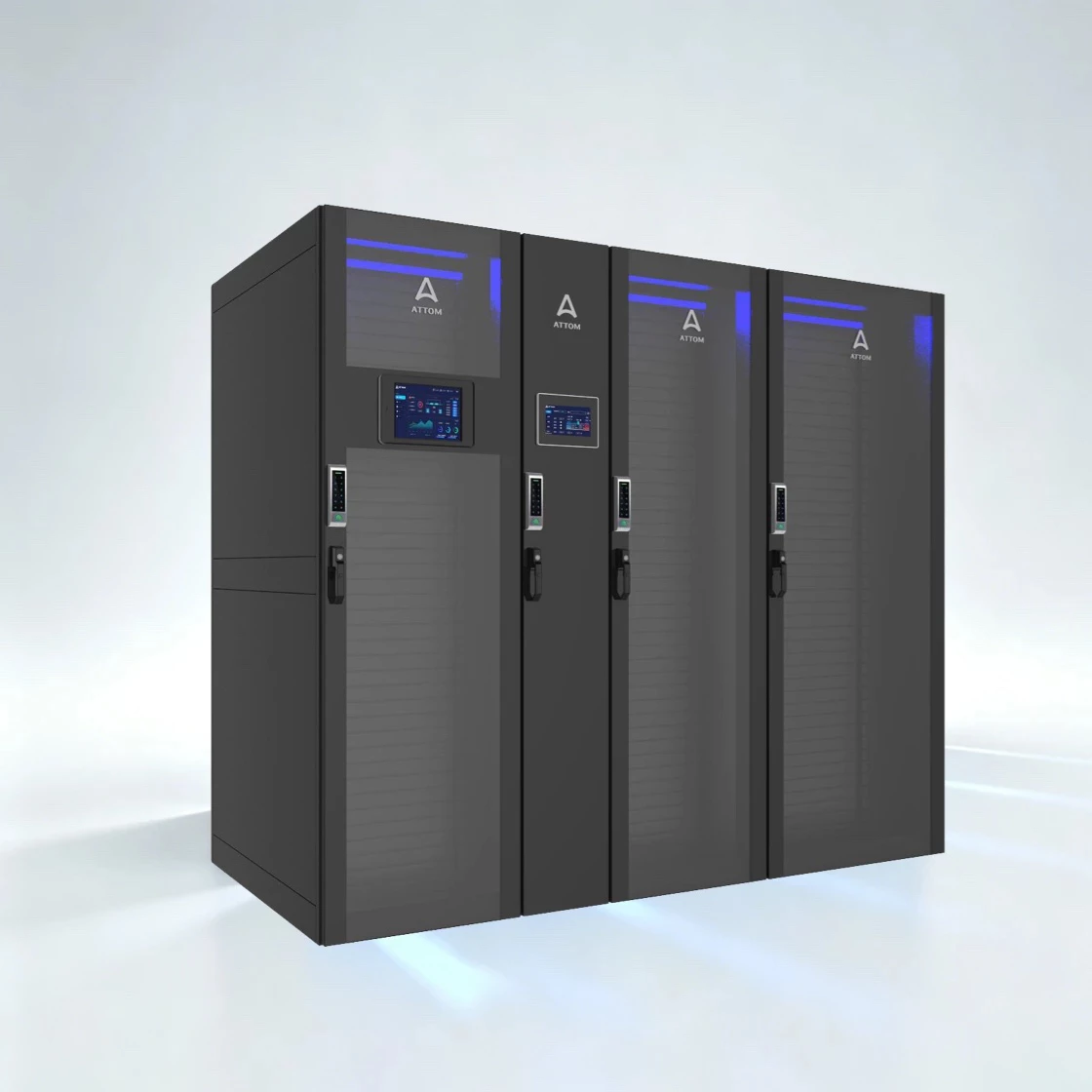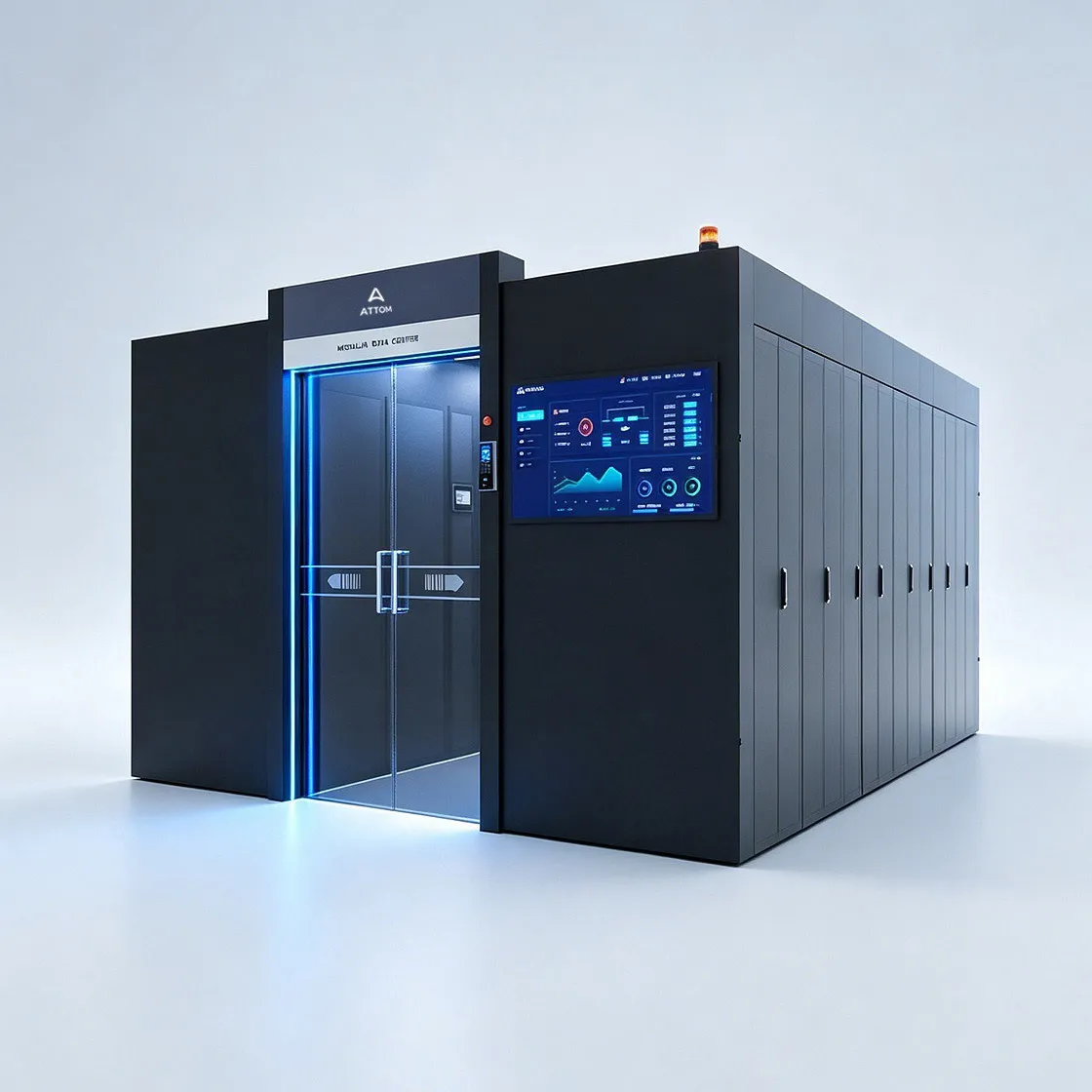
An AI Data Center is a data center designed and engineered to support artificial intelligence workloads, including AI training, inference, machine learning, and other high-performance computing applications.
Compared with conventional enterprise data centers, AI data centers typically need to accommodate higher compute density, greater power demand, more intensive thermal loads, and rapidly changing workload requirements. Their infrastructure therefore needs to coordinate computing, power, cooling, networking, monitoring, and physical infrastructure as an integrated system.
An AI data center is not defined simply by the presence of GPUs. It is defined by infrastructure designed around the performance, power, thermal, and scalability requirements of AI workloads.
Key Characteristics
AI data centers typically have several defining characteristics:
- High-density computing: GPU and accelerator-based systems can create substantially higher rack power densities than conventional enterprise IT.
- High power demand: AI clusters require substantial and stable electrical capacity for computing and supporting infrastructure.
- Advanced cooling: Higher thermal density can require advanced air cooling or liquid cooling technologies depending on rack density and system design.
- High-speed networking: AI training and inference environments often require high-bandwidth, low-latency connections between computing nodes and storage systems.
- Scalable infrastructure: AI hardware and workloads evolve quickly, making flexible and expandable infrastructure important.
- Intelligent monitoring: Power, thermal conditions, equipment status, and infrastructure performance need to be continuously monitored.
These requirements make AI data center design increasingly dependent on the coordination of IT infrastructure and facility infrastructure.
AI Data Center vs. Traditional Data Center
The primary difference is not the type of building but the infrastructure requirements created by the workload.
Traditional data centers may be designed primarily around general-purpose enterprise computing, while AI data centers are optimized for accelerator-intensive workloads with higher power density, thermal loads, and networking requirements.
As AI workloads become more demanding, infrastructure decisions around power, cooling, rack design, scalability, and energy efficiency become increasingly important.
Common Applications
AI data centers support a range of AI and high-performance computing applications, including:
- AI model training
- AI inference
- Generative AI
- Machine learning
- Deep learning
- High-performance computing (HPC)
- Large-scale data processing
They can be deployed in hyperscale facilities, colocation environments, enterprise data centers, edge locations, and modular or prefabricated infrastructure depending on workload and deployment requirements.
AI Data Center and Liquid Cooling
Liquid cooling is becoming increasingly important as AI computing pushes rack power density higher.
Depending on the workload and equipment configuration, AI data centers may use technologies such as direct-to-chip cooling, rear-door heat exchangers, or immersion cooling.
However, cooling is only one part of AI data center infrastructure. Effective design also requires appropriate power distribution, rack architecture, monitoring, heat rejection, and facility-level scalability.
For a deeper discussion of AI data center architecture and infrastructure requirements, see ATTOM’s AI Data Center guide.
Related Terms
- AI Infrastructure — The broader infrastructure ecosystem supporting AI computing, including computing, networking, power, cooling, and data center systems.
- GPU Data Center — Data center infrastructure optimized for GPU-based computing workloads.
- High-Density Data Center — A data center designed to support higher IT power and thermal densities.
- Liquid Cooling — A thermal management approach increasingly used for high-density AI and HPC workloads.
- Modular AI Data Center — A prefabricated or modular data center architecture designed specifically for AI workloads.
- Data Center Infrastructure — The physical systems that provide power, cooling, networking, security, and environmental support for IT equipment.
Related ATTOM Solutions
ATTOM provides infrastructure solutions designed to support high-density AI workloads, including AI-ready prefabricated modular data centers, high-density rack systems, liquid cooling, power, and monitoring technologies.
AgileCore is ATTOM’s AI Prefabricated Modular Data Center solution, designed for AI training, inference, and other high-performance computing applications. It integrates modular architecture with advanced liquid cooling technologies and scalable infrastructure.
Explore ATTOM AI Infrastructure Solutions to learn more about AI-ready data center infrastructure and deployment options.
Learn More
For a comprehensive overview of AI data center architecture, infrastructure requirements, and key technologies, read ATTOM’s AI Data Center: A Complete Guide to AI Infrastructure.
This guide provides deeper coverage of the power, cooling, computing, networking, scalability, and infrastructure considerations involved in designing AI-ready data centers.