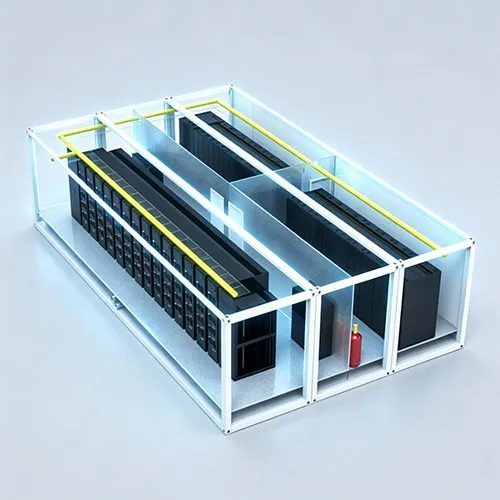
Cold Aisle Containment (CAC) is an airflow management method that fully encloses the cold aisle between facing rows of server cabinets. Cold supply air is delivered into the sealed cold aisle and drawn directly into the front intakes of the servers, while hot exhaust air leaves the rear of the cabinets into the open data hall (or a separate return path). By preventing cold and hot air from mixing, the system ensures that nearly all of the supplied cooling air reaches the IT equipment.
Key advantages of Cold Aisle Containment include:
- Improved cooling effectiveness: Cold air is forced to pass through the servers rather than bypassing them, reducing wasted capacity.
- Higher supply-air temperatures: Better separation allows operators to raise supply temperatures, which expands the window for free cooling and lowers mechanical cooling energy.
- Support for increased density: More predictable airflow helps maintain safe inlet temperatures even as rack power levels rise.
- Compatibility with existing layouts: Can often be retrofit into traditional hot-aisle/cold-aisle arrangements with relatively modest structural changes.
Cold Aisle Containment is the counterpart to Hot Aisle Containment. The choice between the two depends on room geometry, cooling system type (room-level CRAC/CRAH, in-row, or hybrid), and operational preferences. Both approaches significantly outperform open aisle configurations in efficiency and thermal stability.
Cold Aisle Containment and ATTOM
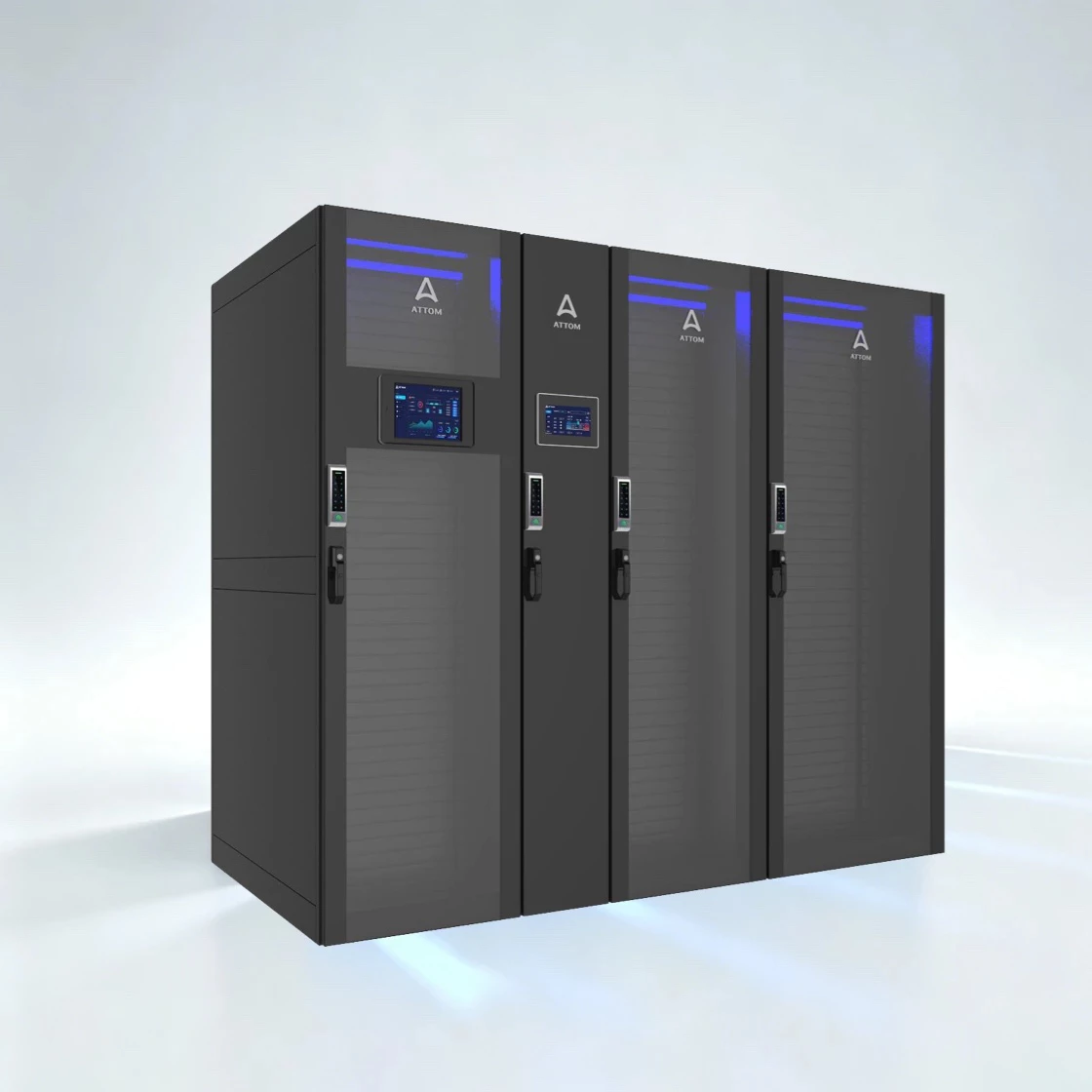
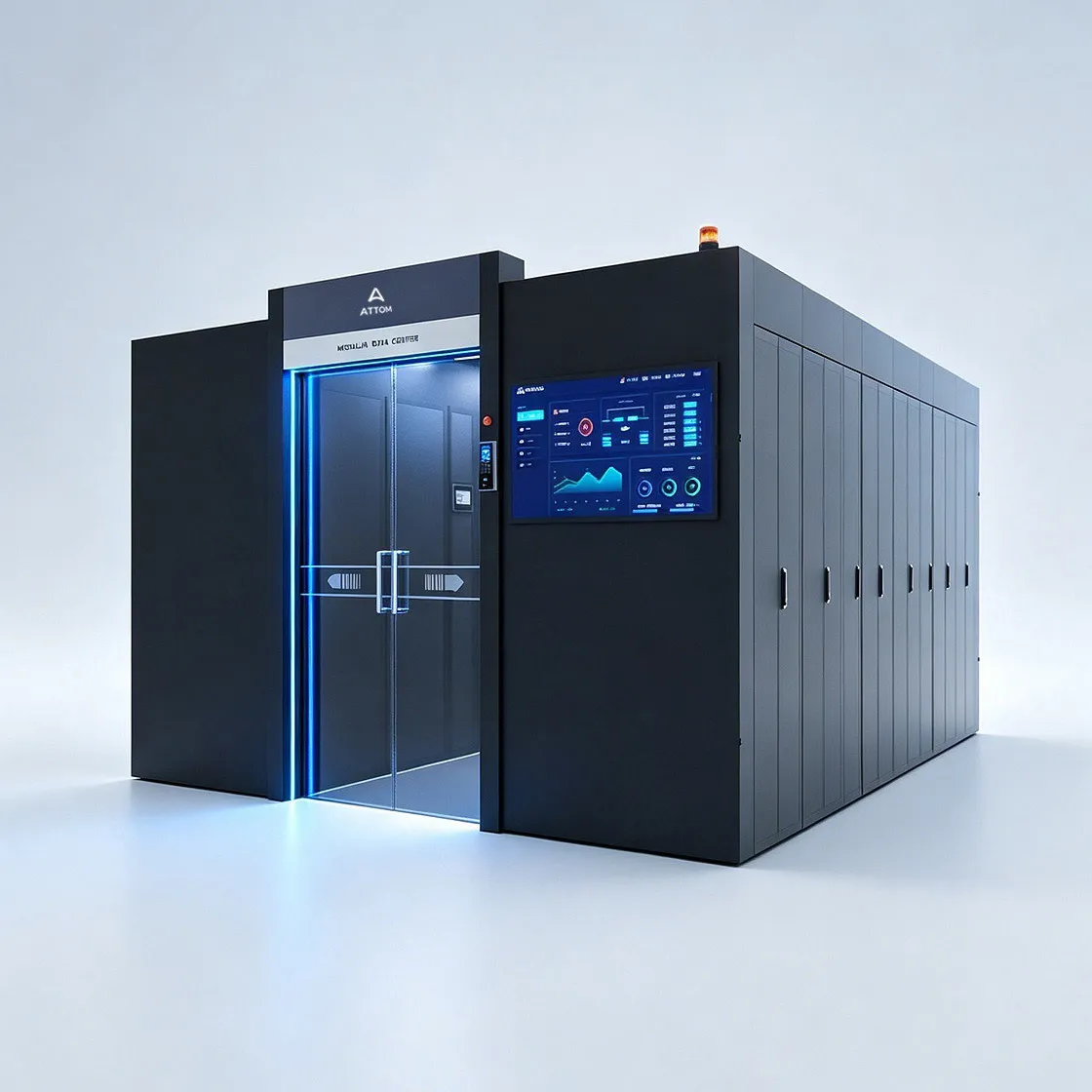
Attom Technology’s modular containment platforms, particularly AgileMod, are designed to implement effective Cold Aisle Containment as part of an integrated airflow strategy. When combined with WiseAir or SmoothAir precision cooling units, the contained cold aisle delivers stable inlet conditions and efficient air utilization—whether used as the primary cooling approach or as a complementary layer alongside emerging liquid cooling deployments.