UPS Battery Comprehensive Guide: Definition, Types, Selection, and Maintenance

Publish By: tomas | Date: 2025-09-19 | Posted in: AC/DC Power, Energy Efficiency
Home
/
News
/
UPS Battery Comprehensive Guide:...

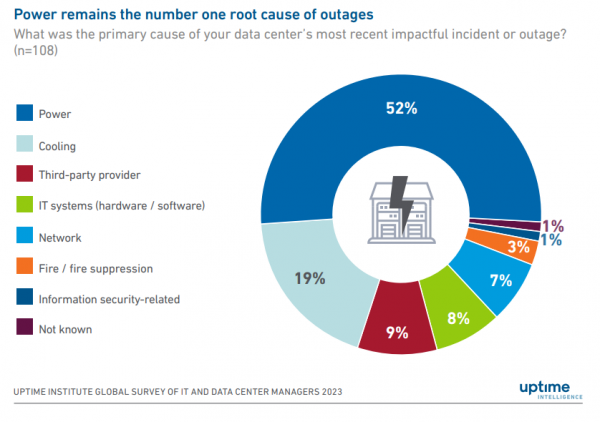
In modern society, reliable power supply is crucial for homes, offices, and corporate data centers. The Uptime Institute’s 2024 Annual Power Outage Analysis Report indicates that electricity remains the leading cause of power outages (52%). To minimize this, a UPS (Uninterruptible Power Supply) has become essential, and the core component is the UPS battery.
捕获68 600x422 1

What is a UPS Battery

A UPS (Uninterruptible Power Supply) is a device that provides short-term power when utility power is interrupted. It is commonly used to protect computers, network equipment, medical instruments, and critical hardware in data centers. In addition to supplying power during outages, it can also improve power quality through filtering and voltage regulation. In a UPS system, the battery (UPS Battery) is the core component for energy storage. When utility power is normal, the battery remains in charging or standby mode; once an outage occurs, the battery immediately delivers power through the inverter to the load, ensuring uninterrupted operation. The main functions of a UPS Battery include providing power assurance, preventing hardware damage from power fluctuations, avoiding data loss, and improving power quality to some extent.

Main Types of UPS Batteries

Common types of UPS Batteries include VRLA (Valve-Regulated Lead-Acid), lithium-ion batteries, nickel-cadmium batteries, and some emerging battery technologies.

  • VRLA (Valve-Regulated Lead-Acid) batteries are currently the mainstream UPS battery type, divided into “AGM (Absorbent Glass Mat)” and “GEL” types. Due to low cost (less than half the price of lithium batteries), good temperature tolerance (operating from -15°C to 40°C), mature technology, and high safety, they are widely used, especially in small to medium enterprise server rooms and household UPS.
  • Lithium-ion batteries have become increasingly popular in recent years. With high energy density, lighter weight (about half that of VRLA), long cycle life (1,000–2,000 charge/discharge cycles before degrading to 80%, which is 2–4 times longer than VRLA), and high charging/discharging efficiency, they are gradually becoming the mainstream choice for high-end data centers and enterprise-grade UPS.
  • Nickel-cadmium batteries are considered “traditional batteries.” They perform well in harsh environments (-40°C to 60°C) but have significant drawbacks: memory effect (capacity shrinks if not fully discharged before recharging), environmental issues due to cadmium, and low energy density (larger in size compared with VRLA for the same capacity). They are mainly used in specialized scenarios.
  • Lithium polymer batteries and UltraBatteries are emerging. The former is lightweight and flexible, suitable for portable UPS, while the latter combines lead-acid and supercapacitor technologies, offering both stability and long life.

Working Principle of UPS Batteries

A UPS system usually consists of a rectifier, inverter, battery pack, and control system. The rectifier converts AC into DC to charge the battery; the inverter converts the DC released from the battery into AC to power the load; the battery pack handles energy storage and release; the control system monitors the battery state and switches power modes when needed. When utility power fails, the battery immediately takes over and outputs stable AC through the inverter. This process typically takes 2–10 milliseconds and almost never affects equipment operation.

UPS Battery Selection and Capacity Calculation

When selecting a UPS Battery, the first step is to calculate the required capacity based on load power. For example, if a system includes a 500W server and a 100W switch, the total power is 600W. You should then select a UPS rated at 1.2–1.5 times the load, i.e., 720VA–900VA. Next, determine the number and capacity of battery packs based on desired backup time. Different application scenarios require different capacities:

  • Home offices typically use 600VA–1000VA UPS with 10–15 minutes of backup.
  • Small enterprises are advised to choose 2–5kVA UPS with 30+ minutes backup.
  • Data centers usually require 10–500kVA UPS with backup times of several hours, often combined with generators.

Extending runtime requires adding more batteries, but cost, space, and cooling must be considered. UPS type also influences battery choice: offline UPS typically use small VRLA batteries, line-interactive UPS are suited for office use, while double-conversion online UPS—commonly used in data centers—are paired with large lithium battery packs.

UPS Battery Installation and Maintenance

Proper installation of UPS Batteries is vital to system stability. During installation, check battery type and polarity to avoid reverse connections or compression, and ensure clean, oxidation-free contacts. The optimal operating temperature is 20–25°C; high temperatures drastically shorten lifespan. Humidity should be controlled to avoid leakage and corrosion, and good ventilation is necessary to prevent overheating. UPS Batteries require regular maintenance, including quarterly discharge tests to verify performance, and monitoring of voltage, internal resistance, and temperature via a Battery Management System (BMS). Common issues include swelling (caused by overcharging or high temperatures), capacity degradation (due to age), and abnormal charge/discharge (possibly inverter or charging circuit faults).

UPS Battery Lifecycle and Replacement

UPS Battery lifespan depends on environment, charge/discharge cycles, depth of discharge, and load size. Lead-acid batteries typically last 2–5 years, lithium-ion batteries 5–10 years, and nickel-cadmium batteries 8–15 years. Replacement is needed when capacity drops more than 30%, swelling or leakage occurs, or normal charge/discharge is no longer possible. Old batteries contain heavy metals like lead and nickel and must be recycled through certified channels to avoid environmental pollution.

Advantages and Limitations of UPS Batteries

The primary advantage of UPS batteries is that they provide security for critical loads, preventing data and equipment damage. As technology advances and costs decrease, their adoption is increasing. However, different battery types have their own advantages and disadvantages: lead-acid batteries are inexpensive but have a short lifespan; lithium batteries have a long lifespan but are expensive; and nickel-cadmium batteries are durable but pose pollution risks.
捕获70 600x430 1
捕获69 600x386 1

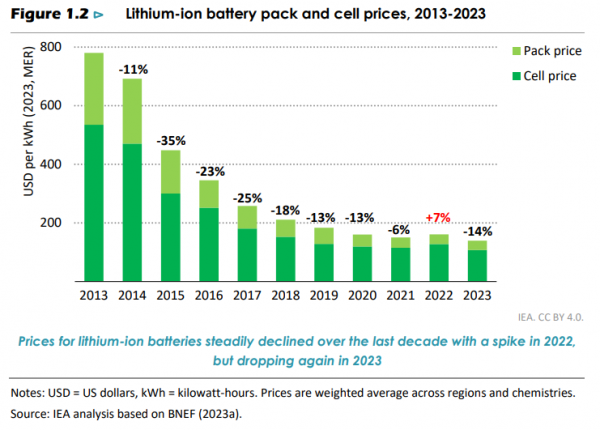
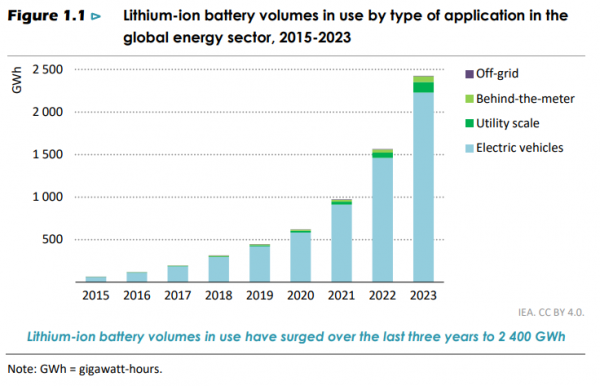
The IEA special report, “Batteries and Secure Energy Transitions,” shows that the use of lithium-ion batteries in the global energy sector is growing rapidly, while lithium-ion battery prices are steadily declining. Lithium-ion batteries and new energy storage technologies are gradually replacing traditional lead-acid batteries and are being combined with renewable energy sources (such as solar and wind power) to promote the development of green UPS systems.
More Related Articles

  • Modular AI Data Centers: The Prefabricated Answer to High-Density Infrastructure...
    Read More
  • Server Racks
    How to Choose the Best Server Racks...
    Read More
  • PDU
    The Ultimate PDU Buying Guide...
    Read More
  • Plan Data Centers for Your Company?

    Talk to our industry experts to define the solution for you.
    Contact Us Now

    Data Center Solution Sales Manager

    About Attom Technology

    We are a global leader in critical data center infrastructure, specializing in high-density AI data center thermal management and liquid cooling solutions. As AI workloads drive unprecedented demand for advanced cooling, we are rapidly expanding our footprint in North America. We are looking for visionary, driven, and highly technical professionals to join our newly established Silicon Valley team to drive the future of sustainable, high-performance data centers.
    Backed by the industrial giant Han’s Laser — a globally recognized leader in smart manufacturing and automation equipment — Attom Technology leverages a world-class industrial platform and robust financial strength to deliver critical data center infrastructure.

    Location: Silicon Valley, CA (Hybrid/On-site)

    Position Summary:

    We are looking for a highly motivated Sales Manager to drive revenue growth in the North American market. You will be on the front lines, targeting enterprise data centers, AI startups, and regional colocation facilities, selling our cutting-edge liquid cooling infrastructure portfolio.

    Key Responsibilities:

    • Achieve and exceed regional sales targets for our liquid cooling and thermal management products.

    • Manage the full sales cycle from prospecting and lead generation to contract negotiation and closing.

    • Develop and maintain strong, long-lasting direct relationships with data center facility managers, IT directors, and procurement teams.

    • Collaborate with the Product Technical Manager to deliver tailored presentations and proof-of-concept (PoC) proposals.

    • Maintain accurate sales forecasting and pipeline management using CRM tools (e.g., Zoho CRM).

    Qualifications:

    • 3+ years of direct B2B sales experience in data center power, cooling, or IT infrastructure.

    • Product Knowledge: Familiarity with selling cooling solutions such as CDU, CRAC, CRAH, RDHx, Cold-plate, and Chillers.

    • Industry Experience: Prior sales experience at companies like Vertiv, Schneider/APC, Eaton, Stulz, Airsys, or sales roles within the IT hardware sector (Cisco, Lenovo, Broadcom) with a focus on infrastructure.

    • Hunter mentality with a proven track record of breaking into new accounts and growing market share in the Silicon Valley tech ecosystem.

    • Strong presentation and closing skills.

    Application email: support@attom.tech

    Data Center Solution Technical Manager

    About Attom Technology

    We are a global leader in critical data center infrastructure, specializing in high-density AI data center thermal management and liquid cooling solutions. As AI workloads drive unprecedented demand for advanced cooling, we are rapidly expanding our footprint in North America. We are looking for visionary, driven, and highly technical professionals to join our newly established Silicon Valley team to drive the future of sustainable, high-performance data centers.
    Backed by the industrial giant Han’s Laser — a globally recognized leader in smart manufacturing and automation equipment — Attom Technology leverages a world-class industrial platform and robust financial strength to deliver critical data center infrastructure.

    Location: Silicon Valley, CA (Hybrid/On-site)

    Position Summary:

    The Product Technical Manager will act as the technical bridge between our North American clients and our global R&D team. You will be the resident expert on our liquid cooling portfolio, guiding customers through complex thermal system designs, and ensuring our products perfectly align with local compliance and technical requirements.

    Key Responsibilities:

    • Lead technical pre-sales engagements, providing expert consultation on liquid cooling architectures for high-density AI workloads.

    • Develop comprehensive technical proposals, system designs, and ROI analyses for clients involving CDU, RDHx, and direct-to-chip (Cold-plate) deployments.

    • Act as the Voice of the Customer (VoC) in North America, gathering detailed technical requirements and feeding them back to the R&D center to drive product localization and innovation.

    • Ensure products meet North American standards (e.g., UL, ASHRAE guidelines).

    • Provide training and technical support to the regional sales team and channel partners.

    Qualifications:

    • Bachelor’s or Master’s degree in Mechanical Engineering, Thermodynamics, Electrical Engineering, or a related technical field.

    • 2+ years of experience in product management, technical pre-sales, or thermal engineering within the data center or IT hardware industry.

    • Technical Proficiency: Mastery in the design and application of CDU, CRAC, CRAH, RDHx, Cold-plate, and Chiller systems. (Familiarity with piping diagrams, valve configurations, and redundancy classifications is highly preferred).

    • Target Background: Previous roles at infrastructure leaders (Vertiv, nVent, Motivair, Schneider, Boyd, Stulz, etc.) or thermal engineering roles at major IT/Semiconductor companies (NVIDIA, AMD, Intel, Lenovo, etc.).

    • Ability to translate complex technical concepts into clear business value propositions.

    Application email: support@attom.tech

    Data Center Solution Business Development Director

    About Attom Technology

    We are a global leader in critical data center infrastructure, specializing in high-density AI data center thermal management and liquid cooling solutions. As AI workloads drive unprecedented demand for advanced cooling, we are rapidly expanding our footprint in North America. We are looking for visionary, driven, and highly technical professionals to join our newly established Silicon Valley team to drive the future of sustainable, high-performance data centers.
    Backed by the industrial giant Han’s Laser — a globally recognized leader in smart manufacturing and automation equipment — Attom Technology leverages a world-class industrial platform and robust financial strength to deliver critical data center infrastructure.

    Location: Silicon Valley, CA (Hybrid/On-site)

    Position Summary:
    We are seeking an experienced Business Development Director to spearhead our Go-To-Market (GTM) strategy for data center thermal management liquid cooling solutions in North America. You will be instrumental in building strategic partnerships with Hyperscalers, Colocation providers, and top-tier IT hardware manufacturers, establishing our brand presence, and identifying new market opportunities in the fast-growing AI data center ecosystem.

    Key Responsibilities:

    • Develop and execute a comprehensive North American business development strategy focused on high-density liquid cooling solutions.
    • Identify, negotiate, and close strategic partnerships with key players in the AI and data center ecosystem (e.g., server OEMs, AI chip developers).
    • Collaborate closely with the global HQ to align product roadmaps with North American market trends and client demands.
    • Represent the company at industry events (e.g., Data Center World, OCP, DCD) to build brand awareness and thought leadership.
    • Build and manage a robust pipeline of high-level strategic opportunities.

    Qualifications:

    • 5+ years of business development or strategic sales experience in the data center infrastructure or IT thermal management sector.
    • Industry Background: Proven track record at leading thermal management companies (e.g., Vertiv, nVent, Motivair, Schneider/APC, Boyd, Eaton, Stulz, Airsys) OR IT hardware giants with a focus on thermal ecosystems (NVIDIA, AMD, Broadcom, Intel, Lenovo, Oracle, Cisco).
    • Technical Expertise: Deep commercial understanding of advanced cooling technologies including CDU, CRAC, CRAH, RDHx, Cold-plate, and Chillers.
    • Strong existing network with decision-makers at hyperscale cloud providers and colocation data centers in the Silicon Valley area.
    • Excellent communication, negotiation, and cross-cultural collaboration skills.

    Application email: support@attom.tech

    Request a Quote