6 Best Practices for Data Center Design

Publish By: tomas | Date: 2026-02-04 | Posted in: Micro Modular Data Center
Home
/
News
/
6 Best Practices for Data...

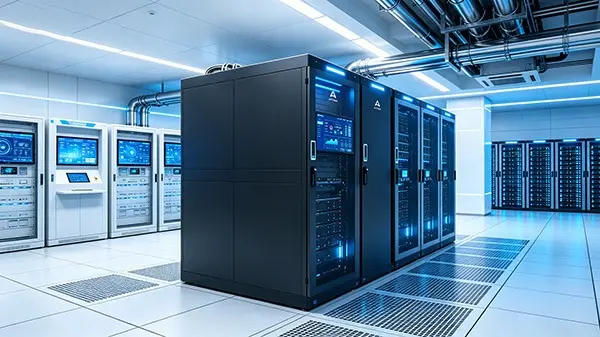
Today, outstanding data center design is not about pushing theoretical performance to the limit. Instead, it is about building an infrastructure framework that balances reliability, scalability, energy efficiency, and operational realities.

Industry experience consistently shows that successful data center design must integrate power, cooling, space, and operations at the planning stage, rather than optimizing each subsystem in isolation. This “system-level design” approach has become a core best practice in modern data centers.

Why Is Data Center Design So Critical?

Throughout the lifecycle of a data center, design decisions often determine operating costs, scalability, and reliability for the next 10–20 years. Unlike equipment selection, design mistakes are difficult to fully correct through later upgrades, and their impact tends to compound over time.

From an engineering perspective, data center design is not simply a combination of power and cooling systems—it is a balance between business requirements, technical architecture, and cost structure. If load growth trends, power density changes, or operational complexity are overlooked during the design phase, data centers often face capacity bottlenecks, declining energy efficiency, and escalating operational costs in the future.

1. Architecture First

A common mistake in real-world projects is selecting equipment before defining the architecture. Architectural decisions shape a data center’s reliability, scalability, and total cost over the next decade.

A mature data center architecture typically focuses on:

Eliminating single points of failure (SPOF) and defining clear redundancy tiers
This ensures stable operation even when individual components or circuits fail and forms the foundation of high availability.

Aligning power and cooling topology with business availability objectives
Design must reflect workload criticality, ensuring adequate protection for critical loads while controlling costs for non-critical ones.

Defining clear boundaries between infrastructure and IT loads
Clear demarcation simplifies operations and expansion while reducing system interference and improving overall reliability.

Avoiding overdesign and unnecessary cost
Precisely matching capacity to real demand ensures reliability without excessive capital expenditure.

2. Power System Design

The power system defines the upper limit of data center capacity. Once the power architecture is fixed, later upgrades are often costly and risky.

Key considerations include:

Selecting appropriate redundancy models (N, N+1, 2N)
Different workloads require different levels of availability. A balanced redundancy strategy protects critical loads without unnecessary cost.

Adopting three-phase distribution and high-voltage architectures (400V / 480V)
High-voltage three-phase systems reduce line losses, improve distribution efficiency, and provide stable power for high-density racks.

Deploying modular UPS and switching equipment
Modular UPS systems support phased expansion, increase flexibility, and reduce upfront investment risk.

Designing clear and traceable power distribution paths
This simplifies maintenance and fault isolation, reduces downtime risk, and enhances overall system reliability.

3. Cooling System Design

Cooling strategies must be based on actual rack power density, not average values.

Best practices include:

Optimizing air cooling through airflow management
Proper fan placement and hot/cold aisle design maximize air-cooling efficiency.

Hot and cold aisle containment
Separating hot and cold airflow stabilizes temperature distribution and reduces hotspot risk.

Adopting hybrid cooling architectures
Localized liquid cooling or cold plate solutions in high-density areas can reduce total energy consumption and cost.

Introducing liquid cooling for ultra-high-density workloads
For extreme power densities, liquid cooling provides thermal performance beyond the limits of air cooling.

Cooling design should follow the principle of “air optimization first, liquid cooling as a supplement, with equal emphasis on efficiency and cost”, ensuring sustainable operation of high-density computing environments.

4. Designing for Future Scalability

Uncertainty in future load growth is one of the most difficult variables in data center design.

Scalability best practices include:

Modular Data Center (MDC) architecture
Supports on-demand deployment and expansion, reducing initial investment risk.

Phased deployment
Capacity is added in line with business growth, avoiding overinvestment.

Flexible allocation of power and cooling capacity
Resources can be dynamically adjusted as rack configurations change, improving utilization.

Reserving space for AI and high-density computing
Pre-planning pathways, layouts, and power redundancy ensures smooth future upgrades.

5. Space and Rack Layout

Physical layout directly affects airflow efficiency, maintenance efficiency, and scalability.

Best practices include:

Balancing rack density with airflow capacity
Excessive density causes hotspots, while low density wastes space and energy.

Planning cabling routes and maintenance aisles
Ensures equipment can be serviced or replaced at any time, reducing operational downtime risk.

Avoiding localized high-density clusters
High-density zones must be supported by adequate power and cooling, or they become bottlenecks.

Aligning rack layout with power and cooling zones
Prevents mismatches between airflow and power distribution, improving overall efficiency.

Summary: Space layout design should follow the principles of balanced density, maintainability, and alignment with infrastructure, preventing hidden operational risks.

6. Design for Operations

Data center design does not end at construction. Long-term operational efficiency depends heavily on early design decisions.

Operations-oriented design includes:

Observability through DCIM and monitoring systems
Real-time visibility into power, cooling, and load conditions improves response speed.

Serviceability of infrastructure
Equipment layout and pathways must support routine maintenance and rapid fault handling.

Ease of equipment upgrades and replacements
Planned redundancy and reserved space ensure smooth future upgrades.

Predictability of lifecycle management
Maintenance strategies and spare parts planning reduce operational uncertainty.

FAQ

1. What is the most fundamental principle of data center design?

The core principle is not maximizing technical metrics, but balancing reliability, scalability, and cost.

Mature designs typically follow an approach of architecture first, demand-based redundancy, modular expansion, and operations-oriented design, rather than simply stacking equipment.

2. What is the most commonly overlooked issue in data center design?

The most overlooked factor is future load evolution.

Many data centers are designed around current business scale but fail to account for structural changes driven by AI, high-density computing, and business growth—making later upgrades far more expensive than initial design investment.

3. Is air cooling no longer sufficient for modern data centers?

Air cooling remains the mainstream solution, but its applicable range is shrinking.

It is still cost-effective in low- to medium-density scenarios, while liquid cooling is becoming a necessary complement in AI and HPC environments.

As a result, hybrid cooling architectures are becoming a practical choice.

4. Is modular design suitable for all data centers?

Modular design is applicable in most scenarios, but it is not universal.

It is highly advantageous where load growth is uncertain, while traditional centralized architectures may remain more cost-effective in large-scale data centers with stable workloads.

5. How will AI and high-density computing reshape data center design?

AI workloads are fundamentally changing data center assumptions.

Rack power density is increasing from 5–10 kW to 30–100 kW or even higher, forcing a redesign of traditional power and cooling architectures.

Future data center design will increasingly favor high-density, liquid cooling, and modular architectures.
More Related Articles

  • Modular AI Data Centers: The Prefabricated Answer to High-Density Infrastructure...
    Read More
  • Server Racks
    How to Choose the Best Server Racks...
    Read More
  • PDU
    The Ultimate PDU Buying Guide...
    Read More
  • Plan Data Centers for Your Company?

    Talk to our industry experts to define the solution for you.
    Contact Us Now

    Data Center Solution Sales Manager

    About Attom Technology

    We are a global leader in critical data center infrastructure, specializing in high-density AI data center thermal management and liquid cooling solutions. As AI workloads drive unprecedented demand for advanced cooling, we are rapidly expanding our footprint in North America. We are looking for visionary, driven, and highly technical professionals to join our newly established Silicon Valley team to drive the future of sustainable, high-performance data centers.
    Backed by the industrial giant Han’s Laser — a globally recognized leader in smart manufacturing and automation equipment — Attom Technology leverages a world-class industrial platform and robust financial strength to deliver critical data center infrastructure.

    Location: Silicon Valley, CA (Hybrid/On-site)

    Position Summary:

    We are looking for a highly motivated Sales Manager to drive revenue growth in the North American market. You will be on the front lines, targeting enterprise data centers, AI startups, and regional colocation facilities, selling our cutting-edge liquid cooling infrastructure portfolio.

    Key Responsibilities:

    • Achieve and exceed regional sales targets for our liquid cooling and thermal management products.

    • Manage the full sales cycle from prospecting and lead generation to contract negotiation and closing.

    • Develop and maintain strong, long-lasting direct relationships with data center facility managers, IT directors, and procurement teams.

    • Collaborate with the Product Technical Manager to deliver tailored presentations and proof-of-concept (PoC) proposals.

    • Maintain accurate sales forecasting and pipeline management using CRM tools (e.g., Zoho CRM).

    Qualifications:

    • 3+ years of direct B2B sales experience in data center power, cooling, or IT infrastructure.

    • Product Knowledge: Familiarity with selling cooling solutions such as CDU, CRAC, CRAH, RDHx, Cold-plate, and Chillers.

    • Industry Experience: Prior sales experience at companies like Vertiv, Schneider/APC, Eaton, Stulz, Airsys, or sales roles within the IT hardware sector (Cisco, Lenovo, Broadcom) with a focus on infrastructure.

    • Hunter mentality with a proven track record of breaking into new accounts and growing market share in the Silicon Valley tech ecosystem.

    • Strong presentation and closing skills.

    Application email: support@attom.tech

    Data Center Solution Technical Manager

    About Attom Technology

    We are a global leader in critical data center infrastructure, specializing in high-density AI data center thermal management and liquid cooling solutions. As AI workloads drive unprecedented demand for advanced cooling, we are rapidly expanding our footprint in North America. We are looking for visionary, driven, and highly technical professionals to join our newly established Silicon Valley team to drive the future of sustainable, high-performance data centers.
    Backed by the industrial giant Han’s Laser — a globally recognized leader in smart manufacturing and automation equipment — Attom Technology leverages a world-class industrial platform and robust financial strength to deliver critical data center infrastructure.

    Location: Silicon Valley, CA (Hybrid/On-site)

    Position Summary:

    The Product Technical Manager will act as the technical bridge between our North American clients and our global R&D team. You will be the resident expert on our liquid cooling portfolio, guiding customers through complex thermal system designs, and ensuring our products perfectly align with local compliance and technical requirements.

    Key Responsibilities:

    • Lead technical pre-sales engagements, providing expert consultation on liquid cooling architectures for high-density AI workloads.

    • Develop comprehensive technical proposals, system designs, and ROI analyses for clients involving CDU, RDHx, and direct-to-chip (Cold-plate) deployments.

    • Act as the Voice of the Customer (VoC) in North America, gathering detailed technical requirements and feeding them back to the R&D center to drive product localization and innovation.

    • Ensure products meet North American standards (e.g., UL, ASHRAE guidelines).

    • Provide training and technical support to the regional sales team and channel partners.

    Qualifications:

    • Bachelor’s or Master’s degree in Mechanical Engineering, Thermodynamics, Electrical Engineering, or a related technical field.

    • 2+ years of experience in product management, technical pre-sales, or thermal engineering within the data center or IT hardware industry.

    • Technical Proficiency: Mastery in the design and application of CDU, CRAC, CRAH, RDHx, Cold-plate, and Chiller systems. (Familiarity with piping diagrams, valve configurations, and redundancy classifications is highly preferred).

    • Target Background: Previous roles at infrastructure leaders (Vertiv, nVent, Motivair, Schneider, Boyd, Stulz, etc.) or thermal engineering roles at major IT/Semiconductor companies (NVIDIA, AMD, Intel, Lenovo, etc.).

    • Ability to translate complex technical concepts into clear business value propositions.

    Application email: support@attom.tech

    Data Center Solution Business Development Director

    About Attom Technology

    We are a global leader in critical data center infrastructure, specializing in high-density AI data center thermal management and liquid cooling solutions. As AI workloads drive unprecedented demand for advanced cooling, we are rapidly expanding our footprint in North America. We are looking for visionary, driven, and highly technical professionals to join our newly established Silicon Valley team to drive the future of sustainable, high-performance data centers.
    Backed by the industrial giant Han’s Laser — a globally recognized leader in smart manufacturing and automation equipment — Attom Technology leverages a world-class industrial platform and robust financial strength to deliver critical data center infrastructure.

    Location: Silicon Valley, CA (Hybrid/On-site)

    Position Summary:
    We are seeking an experienced Business Development Director to spearhead our Go-To-Market (GTM) strategy for data center thermal management liquid cooling solutions in North America. You will be instrumental in building strategic partnerships with Hyperscalers, Colocation providers, and top-tier IT hardware manufacturers, establishing our brand presence, and identifying new market opportunities in the fast-growing AI data center ecosystem.

    Key Responsibilities:

    • Develop and execute a comprehensive North American business development strategy focused on high-density liquid cooling solutions.
    • Identify, negotiate, and close strategic partnerships with key players in the AI and data center ecosystem (e.g., server OEMs, AI chip developers).
    • Collaborate closely with the global HQ to align product roadmaps with North American market trends and client demands.
    • Represent the company at industry events (e.g., Data Center World, OCP, DCD) to build brand awareness and thought leadership.
    • Build and manage a robust pipeline of high-level strategic opportunities.

    Qualifications:

    • 5+ years of business development or strategic sales experience in the data center infrastructure or IT thermal management sector.
    • Industry Background: Proven track record at leading thermal management companies (e.g., Vertiv, nVent, Motivair, Schneider/APC, Boyd, Eaton, Stulz, Airsys) OR IT hardware giants with a focus on thermal ecosystems (NVIDIA, AMD, Broadcom, Intel, Lenovo, Oracle, Cisco).
    • Technical Expertise: Deep commercial understanding of advanced cooling technologies including CDU, CRAC, CRAH, RDHx, Cold-plate, and Chillers.
    • Strong existing network with decision-makers at hyperscale cloud providers and colocation data centers in the Silicon Valley area.
    • Excellent communication, negotiation, and cross-cultural collaboration skills.

    Application email: support@attom.tech

    Request a Quote