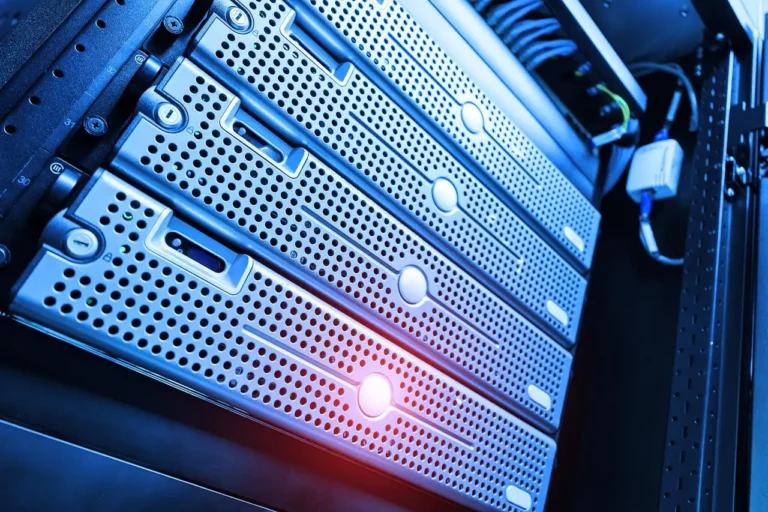
How to Choose the Best Server Racks
Server racks have become a fundamental component of modern data center infrastructure. As computing and storage demands continue to grow, these racks must support servers, networking equipment, power systems, and cooling solutions while allowing for efficient installation, maintenance, and future expansion.
Data center teams face multiple considerations when choosing racks, including physical space constraints, cooling efficiency, power distribution, cable management, and security. A well-chosen server rack helps optimize operational costs and ensures reliable performance over time.
This article provides a clear, step-by-step overview of the key factors to evaluate when selecting server racks, helping facilities managers and IT architects align their choices with current needs and long-term requirements.
What Is a Server Rack?
A server rack, also known as a network rack, is a standardized framework designed to house IT equipment such as servers, switches, routers, UPS units, PDUs, and patch panels. It can range from simple open frames to fully enclosed cabinets with advanced features.
In large data centers, server racks often support multiple devices and include provisions for power, cooling, and connectivity. They enable quick addition or replacement of equipment during upgrades or failures.
When beginning the selection process, organizations should assess their total compute and storage requirements, along with anticipated growth over the next few years. It is also important to consider the overall cooling strategy, power technology, and security needs of the facility.
Server Rack Sizes and Dimensions
Server rack dimensions have been standardized to ensure compatibility with most IT equipment. The primary measurements focus on internal usable space, though external frame dimensions must also be evaluated for room layout, ceiling clearance, cable pathways, and future expansion.
The basic unit of measurement is the rack unit, abbreviated as “U” or “RU.” One rack unit equals 1.75 inches (44.45 mm). Server racks commonly range from small 1U or 6U wall-mount units to large 42U or 48U enclosures used in high-density environments.
The most widely used size in data centers is 42U in height with a standard 19-inch (482.6 mm) internal width. This configuration is cost-effective due to mass production. Depending on the height of individual servers (1U, 2U, or 3U), a 42U rack can accommodate varying numbers of devices while leaving space for accessories such as KVM switches, patch panels, or UPS systems.
Depth is another critical factor. Adequate clearance (approximately 0.875 inches or 22 mm on both front and back) is needed for door operation and rail mounting. Common depth options include:
- 800 mm – Shallow depth, suitable for space-constrained areas
- 1000 mm – Moderately deep
- 1100 mm – Standard average depth for many applications
- 1200 mm – Deep, ideal for extensive rear cable management or additional airflow needs
Choosing the correct depth helps prevent cable congestion and supports proper airflow. Shallower racks may limit options, while deeper racks require more floor space.
Types of Server Racks
Server racks are available in various styles to suit different environments and operational needs. Key types include:
- 4-Post Open Frame Racks: Typically ranging from 24U to 45U in height. These offer excellent ventilation due to their open design but provide limited physical security. They are often used in controlled environments where airflow is a priority.
- Enclosed Cabinet Racks: Fully enclosed designs that protect equipment from dust and unauthorized access. Heights generally range from 6U to 48U. These are a popular choice for most enterprise and data center deployments due to their balance of protection and cost.
- Wall-Mount Racks: Designed for smaller spaces such as offices or edge locations. They are usually fully enclosed and may include swing-out mechanisms for easier access during maintenance.
- Dust- and Water-Resistant Racks: Built to protect against moisture and particles, with heights from 12U to 48U. These are suitable for indoor environments requiring higher protection levels.
- Self-Contained Racks with Integrated Cooling: These include built-in air conditioning units with cooling capacities from 800 to 12,000 BTU, making them useful in locations with challenging ambient conditions.
- Portable Server Racks: Lightweight and durable enclosed units, typically 8U to 20U in height. They are stackable and ideal for temporary setups or frequently reconfigured spaces.
Each type offers different trade-offs in ventilation, security, installation ease, and environmental protection. Selection should match the specific scale, location, and operational habits of the data center.
Cooling Strategies for Server Racks
Effective cooling is essential for maintaining equipment reliability and controlling energy costs. Common cooling approaches for server racks include:
- Air Ventilation: The most economical method, using natural airflow, mechanical fans, or a combination. Perforated doors or open frames help exhaust hot air. This works well for lower-density deployments but may require additional fans as equipment density increases.
- Air Conditioning: Provides precise temperature control for individual racks or entire rooms. While more expensive than basic ventilation, it offers better stability in densely packed server environments.
- Liquid Cooling: Uses water or specialized coolants to remove heat efficiently. This approach is particularly effective for high-performance computing but involves greater implementation complexity and cost.
When selecting racks, evaluate compatibility with the facility’s overall cooling architecture, including support for perforated doors, rear-door heat exchangers, or liquid cooling interfaces.
Power Supply and Management
Reliable power delivery is critical for continuous operation. Power Distribution Units (PDUs) installed within or attached to server racks come in two main categories:
- Standard PDUs: Offer basic power distribution with features such as fault indicators and output displays. Management typically requires on-site intervention.
- Intelligent PDUs: Enable remote monitoring, control, and reboot capabilities via network connection. They support detailed power usage tracking and improve operational efficiency.
The choice of PDU should align with the facility’s monitoring requirements and redundancy needs, ensuring seamless integration with UPS and backup power systems.
Security and Protection Features
Physical and environmental security are important considerations for server racks. Recommended features include:
- Locking Doors: Many racks offer perforated doors with secure locks to balance ventilation and basic access control.
- Environmental Monitoring: Sensors for temperature, humidity, water leakage, door status, and power consumption can send alerts when anomalies occur.
- Seismic Protection: In earthquake-prone areas, racks can be equipped with shock-absorbing feet, anti-tip mechanisms, or base isolation systems to enhance structural stability.
Combining these with facility-wide access control and surveillance further strengthens overall protection.
Conclusion
Choosing the best server racks requires balancing size, type, cooling compatibility, power options, and security features. The goal is to select racks that meet immediate equipment needs while supporting efficient operations and future scalability.
Key Takeaways:
- Start with standard 42U height and 19-inch width as a baseline, then calculate usable space based on server heights and accessories.
- Evaluate depth carefully to accommodate cables, rails, and airflow requirements.
- Match rack type to the environment — open frames for ventilation or enclosed cabinets for protection.
- Plan cooling and power strategies early to avoid costly retrofits.
- Incorporate security features and monitoring to safeguard critical equipment.
A systematic evaluation process helps ensure server racks contribute positively to data center reliability and efficiency.
If you are planning a new deployment or upgrading existing facilities, consider a detailed assessment of your specific power density, layout, and growth projections. Engaging with experienced infrastructure specialists can provide tailored recommendations for your environment.
FAQ
1. What is the most common server rack size? The 42U height with 19-inch internal width is the most widely used in data centers due to its balance of capacity, compatibility, and cost-effectiveness.
2. How do I determine the right depth for my server rack? Consider the depth of your servers, rear cable management needs, and required clearance for doors and rails. Depths from 1000 mm to 1200 mm are common for most standard installations.
3. Should I choose standard or intelligent PDUs? Intelligent PDUs are recommended for modern data centers as they enable remote monitoring and control, improving uptime and operational efficiency.
4. How important is cooling when selecting server racks? Cooling compatibility is critical. Evaluate whether the rack supports adequate airflow, perforated doors, or future liquid cooling options based on your expected equipment density.